
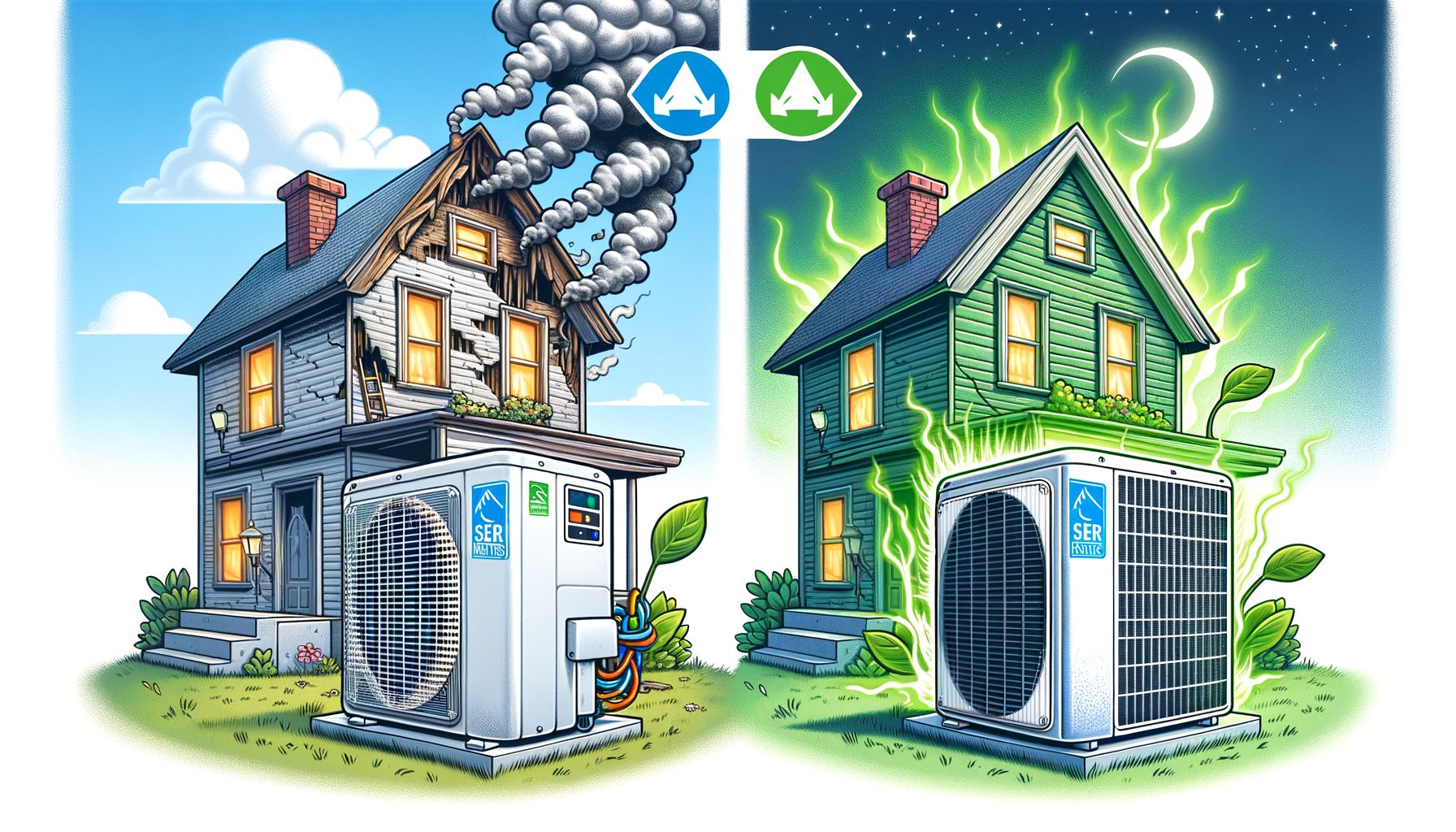
Confused by SEER ratings when shopping for an energy-efficient air conditioner? You’re not alone. With energy prices rising and summers getting hotter, choosing the right cooling system can feel like decoding alphabet soup. In this guide, you’ll get plain-language answers about SEER, see what the numbers actually do to your bill, and learn how to pick a unit that keeps you comfortable without wasting energy—or money.
What SEER Really Means—and Why It Matters for Your Wallet
SEER stands for Seasonal Energy Efficiency Ratio. It measures how efficiently an air conditioner or heat pump cools your home over an entire cooling season. In simple terms: the higher the SEER rating, the less electricity your system needs to keep rooms comfortable. That’s why SEER ratings are a key metric when you’re choosing an energy-efficient air conditioner.
Why should you care? Because cooling costs can swallow a big chunk of your energy bill—often 30–50% in warm climates. Every step up in SEER can reduce that cost. A system rated SEER 16 typically uses about 13% less electricity than SEER 14 under similar conditions. Over 10–15 years (a common lifespan if maintained), that difference can translate into hundreds or even thousands in savings, depending on your local electricity rates and how often you run the AC.
Comfort goes beyond raw efficiency. Many higher-SEER systems use variable-speed or inverter-driven compressors that ramp up or down smoothly. That means steadier temperatures, better humidity control, and less noise. What’s interesting too: in humid regions, better dehumidification can make 76°F feel like 74°F, allowing you to raise the thermostat and save even more. These features can also reduce short-cycling, which helps equipment last longer.
Regulations are tightening globally. Well, here it is: in the United States, the minimum efficiency standard moved to SEER2 in 2023, with regional minimums typically in the 13.4–14.3 SEER2 range. Other regions have their own labels but share the same goal—push the market toward efficient, climate-friendly cooling. For homeowners and renters, that means today’s baseline models are more efficient than older units installed a decade ago. If your system is older than 10–12 years, odds are a new unit with a higher SEER could pay for itself through lower bills—especially if you pair it with proper sizing, smart controls, and sealed ducts.
Bottom line: SEER is not marketing fluff. It’s a practical way to compare models and estimate operating cost. The trick is understanding how to translate a rating into your climate, usage patterns, and budget—so you buy the sweet spot, not just the biggest number.
How to Read SEER Ratings: Good, Better, Best (With Real-World Examples)
Think of SEER ratings like miles per gallon for cars. A higher number means better efficiency, but the best choice depends on your driving (or in this case, cooling) habits. Well, here it is: a straightforward way to frame it for typical central air systems:
Good: SEER 14–15. These meet or slightly exceed minimum standards in many regions and are a solid upgrade from older systems rated SEER 10–13. If you live in a mild climate, rent short term, or have a tight budget, this tier often makes sense.
Better: SEER 16–18. For many households, it hits the sweet spot. You get noticeable energy savings plus comfort perks like multi-stage or variable-speed operation. In moderate to hot climates, the payback period usually looks reasonable—especially with rebates.
Best: SEER 19+. Top-tier systems with advanced compressors, smart controls, and excellent dehumidification. They shine in hot, long summers and for people who prioritize comfort and quiet. Upfront costs are higher, so check incentives and run the math before you commit.
The math matters. Then this: if electricity costs $0.20/kWh and your current unit uses 2,500 kWh each summer, a 20% efficiency improvement could save you about $100 per season ($0.20 × 500 kWh), or around $1,000 over 10 years—more if rates rise or you cool more hours. Your actual savings depend on climate, thermostat settings, home insulation, and duct leakage. That’s why a quick home energy check can make SEER upgrades pay off faster.
Use the table below as a directional guide—not a guarantee. It compares common SEER choices against an older SEER 12 baseline to illustrate typical savings ranges in different climates.
| SEER Rating | Estimated Energy Use vs. SEER 12 | Typical Annual Savings (Moderate Climate) | Typical Annual Savings (Hot Climate) |
|---|---|---|---|
| 14 | ~15% less | $70–$120 | $120–$200 |
| 16 | ~25% less | $120–$200 | $200–$350 |
| 18 | ~33% less | $170–$270 | $300–$450 |
| 20 | ~40% less | $220–$330 | $380–$550 |
Notes: Savings estimates assume a $0.18–$0.22/kWh range and typical usage. In colder zones with short cooling seasons, savings are on the low end; in very hot zones, savings can exceed the high end. Many utilities and governments offer rebates or tax credits for efficient systems, which can shorten payback dramatically. Before buying, compare a few quotes, check available incentives, and ask installers to show annual energy cost estimates specific to your home.
If you’re choosing a room AC or a portable unit, look for CEER (Combined Energy Efficiency Ratio) on the rating label; it’s similar in concept to SEER but tailored to those products and includes standby power. Always compare apples to apples: central systems by SEER/SEER2, room units by CEER, and heat pumps by both cooling and heating metrics.
SEER vs. SEER2, EER, and HSPF: Avoid These Buying Mistakes
One of the biggest traps in shopping for an energy-efficient air conditioner is mixing up efficiency labels—or comparing numbers that aren’t directly comparable. Here’s how to keep it straight.
SEER vs. SEER2: In the U.S., SEER2 replaced SEER as the test standard for new central systems starting in 2023. SEER2 uses updated test procedures that better reflect real-world conditions, including higher external static pressure to account for ductwork. SEER2 numbers are typically a bit lower than legacy SEER values for the same hardware. If you see both on spec sheets, don’t panic—just compare like with like. Ask your contractor to provide efficiency and operating cost in the same metric across all quotes. When in doubt, prioritize SEER2 for new purchases in North America.
EER (Energy Efficiency Ratio): EER measures efficiency at a single, fixed outdoor temperature (often 95°F/35°C). Because it’s a one-point test, EER is useful for hot-climate performance comparisons and for systems that run heavily during heat waves. A system with high SEER but mediocre EER may perform less impressively on the year’s hottest days. If you live in a very hot region or run AC hard during peak hours, consider both SEER/SEER2 and EER when comparing models.
HSPF/HSPF2: For heat pumps (which can cool and heat), HSPF (or HSPF2 under newer testing) measures heating-season efficiency. If you plan to use a heat pump year-round, treat HSPF/HSPF2 as equally important to SEER/SEER2. In mild to moderate climates, modern high-efficiency heat pumps can beat the operating cost of electric resistance heating by a wide margin, sometimes even competing with natural gas where rates are favorable.
Global labels: Outside North America, you may see seasonal metrics under different test protocols, sometimes also called SEER or shown on energy labels (for example, EU energy classes like A++ or A+++). The concept is similar—seasonal performance over typical weather—but the numbers aren’t always directly comparable to U.S. SEER/SEER2. Always compare products rated under the same regional standard and rely on local energy labels for purchasing decisions.
Common mistakes to avoid: Don’t chase the absolute highest SEER if it breaks your budget or if your home’s ductwork is leaky. Don’t compare SEER to EER or SEER to SEER2 without context. Installation quality is often underestimated. And don’t forget incentives—rebates, tax credits, and low-interest financing can tilt the value equation in favor of a slightly higher-efficiency model with better comfort features.
Sizing, Ducts, and Installation: Why SEER Alone Won’t Save You Money
You can buy the most efficient AC on paper and still waste energy if the system is oversized, ducts leak, or controls aren’t set right. Real efficiency is a system property, not just a box rating.
Proper sizing: Bigger isn’t better. An oversized unit cools the air quickly and shuts off, leading to short cycles, poor humidity control, uneven temperatures, and unnecessary wear. A right-sized system runs longer, steadier cycles—keeping you comfortable and efficient. A Manual J load calculation should be performed (or a comparable regional standard), not a rule-of-thumb estimate. If a contractor won’t run a load calc, get another quote.
Ductwork matters: Leaky or undersized ducts can waste 20–30% of cooling output before it ever reaches your rooms. Have ducts inspected, sealed (preferably with mastic, not just tape), and balanced. If you’re replacing equipment, confirm that the air handler and duct static pressure match the blower’s capabilities. Many SEER2-rated systems assume more realistic duct resistance—so make sure your installation does, too.
Airflow and refrigerant charge: Correct airflow across the coil and a proper refrigerant charge are essential. Too little or too much refrigerant hurts efficiency and can damage the compressor. Good installers take time to measure subcooling/superheat and verify airflow (cfm/ton). They should also set up the thermostat for staged or variable-speed operation if your system supports it.
Envelope upgrades help SEER shine: Simple upgrades like sealing attic leaks, adding insulation, and installing reflective shades can let you choose a smaller system and run it less often. Well, here it is: smart thermostats with geofencing can pre-cool before peak hours and let the system coast when you’re away. Routine maintenance—filters, coils, and drains—protects your investment. A dirty filter can bump energy use by 5–15% and stress the blower motor.
In apartments or older homes where ducts are a problem, consider ductless mini-split heat pumps. They often deliver high SEER/SEER2 efficiency with zoned comfort and minimal disturbance during installation. For a room or studio, a high-CEER window unit with inverter technology can be a low-cost, high-impact upgrade over a decade-old model.
Practical Steps to Choose an Energy-Efficient Air Conditioner Today
1) Set your target with numbers. Look up your last 12 months of electricity bills and estimate how much goes to cooling. If you don’t know, a home energy monitor can help. Decide on a SEER/SEER2 target range: for most homes, “Better” (SEER 16–18 or SEER2 equivalent) strikes a smart balance of cost, comfort, and savings.
2) Get three quotes—with load calcs. Ask each contractor for a Manual J (or regional equivalent), duct evaluation, and written estimates that include SEER/SEER2, EER, staging type (single-stage, two-stage, variable-speed), warranty terms, and total installed cost. Request annual operating cost estimates based on your local rates and thermostat settings. Compare apples to apples.
3) Check incentives before you buy. Many countries, states, provinces, and utilities offer rebates or tax credits for high-efficiency equipment and heat pumps. These can reduce upfront cost by hundreds or more. Search your utility’s website and look up incentive databases or government energy pages. In the U.S., for example, ENERGY STAR and DSIRE list many programs. Globally, check your national energy ministry or local authority’s energy-efficiency portal.
4) Consider comfort features. Variable-speed compressors and blower motors improve humidity control and noise. A right-sized, two-stage system may beat an oversized, ultra-high-SEER single-stage unit in real comfort and practical savings. If you live in a humid climate, prioritize systems with strong latent (moisture) removal and smart controls.
5) Plan for the whole system. Seal and balance ducts. Install a programmable or smart thermostat and set reasonable schedules (e.g., 78°F/25.5°C when home, a few degrees higher when away). Replace or wash filters regularly—check monthly during peak season. Keep outdoor units clear of debris and shaded if possible (without blocking airflow).
6) Think about the future. If you might add solar, electrify heating, or finish a new room, tell your contractor. They can design for flexibility or steer you toward a heat pump that efficiently cools and heats. If you rent, a high-CEER window or portable inverter unit may be your best move now—take it with you when you move.
7) Verify after install. Ask for commissioning data: measured airflow, static pressure, refrigerant charge, and thermostat programming. Keep documents for warranty and rebates. After the first bill cycle, compare usage to last year to see if savings align with expectations.
Q&A: Quick Answers to Common SEER Questions
Q: Is a higher SEER always worth the extra cost? A: Not always. In mild climates or low-usage homes, jumping from SEER 16 to SEER 20 may take too long to pay back. In hot or humid regions with high electricity rates, premium models can make sense—especially with rebates and better comfort.
Q: What is a good SEER rating in 2025? A: For many homes, SEER 16–18 (or the SEER2 equivalent) is a strong balance. Aim higher if you have long cooling seasons, high power costs, or value top-tier comfort and quiet.
Q: How do I find my current AC’s SEER? A: Check the outdoor unit’s nameplate or the manufacturer’s model number online. Older systems may list SEER directly; if not, a model lookup on the manufacturer’s site usually shows it.
Q: What’s the difference between SEER and SEER2? A: SEER2 uses updated test procedures that better reflect real duct conditions. Numbers are not identical; compare products using the same metric, and prefer SEER2 for new North American purchases.
Q: Do window or portable ACs have SEER? A: They typically use CEER (Combined Energy Efficiency Ratio). For mini-splits and central systems, look for SEER/SEER2; for room units, compare CEER.
Conclusion: Turn SEER Knowledge into Lower Bills and Better Comfort
We’ve unpacked what SEER means, how it differs from SEER2, EER, and HSPF, and why installation quality and home upgrades matter as much as the number on the label. You learned how to read SEER ratings in context—Good, Better, Best—and how real-world savings change by climate, usage, and incentives. We walked through practical steps: get load-calculated quotes, tighten ducts, choose smart features, and verify commissioning so your new system delivers the efficiency you paid for.
Here’s your next move. If your current AC is 10+ years old or struggles to keep up, take 15 minutes to gather your last year of energy bills and set a target range (SEER 16–18 works for most). Schedule two to three quotes that include a load calculation and duct check. Before signing, search for rebates and tax credits—you might unlock hundreds in savings. Once installed, set a smart schedule and keep filters clean. Then this: compare your next bill to last year’s to confirm you’re on track.
Remember: SEER is a powerful guide, but the smartest choice balances efficiency, comfort, and a professional installation tailored to your home. Start small if needed—seal ducts, upgrade a thermostat, or choose a high-CEER room unit—then build toward a right-sized, high-efficiency system when timing and budget align. Your future self (and your utility bill) will thank you.
If this guide helped, share it with a friend who’s shopping for AC. Have a question about your home’s setup or climate? Ask it now—there’s always a practical, data-backed answer waiting. The best time to invest in comfort and efficiency is before the next heat wave hits. Ready to breathe easier and spend less?
Helpful Resources and Outbound Links:
U.S. Department of Energy: Central Air Conditioning
ENERGY STAR: Central Air Conditioners
DSIRE: Incentives and Rebates (U.S.)
U.S. EPA: Clean Energy
International Energy Agency: Efficient Cooling
European Commission: Cooling and Air Conditioning Policy
Sources:
– U.S. Department of Energy (DOE) efficiency standards and consumer guidance on air conditioning
– ENERGY STAR product criteria and market data for air conditioners and heat pumps
– International Energy Agency (IEA) reports on global cooling demand and efficiency trends
– Industry best practices for Manual J load calculations and duct sealing (ACCA/ASHRAE)