
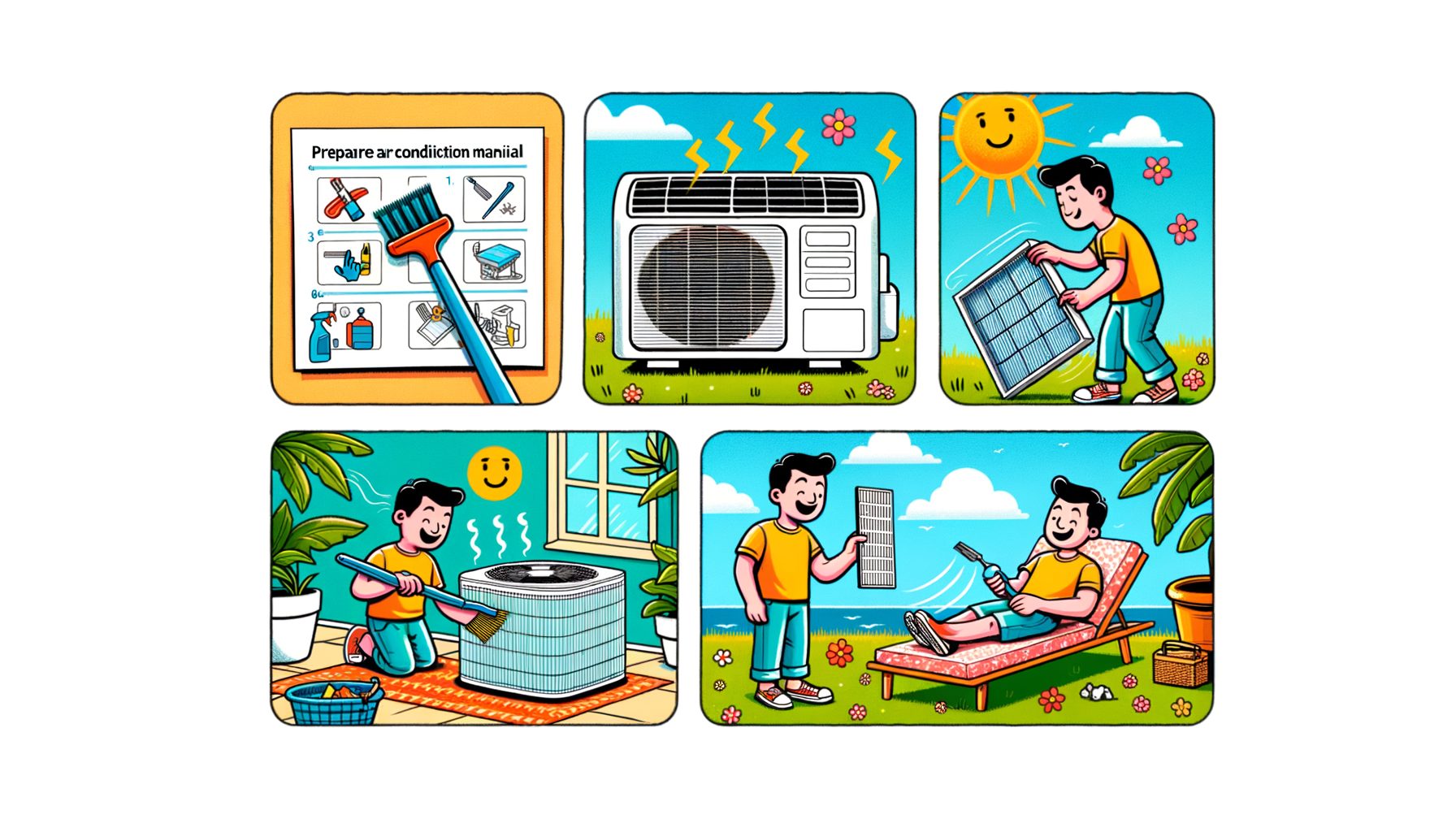
When the first heat wave hits, the last thing you want is a noisy, weak, or broken air conditioner. Summer-readiness isn’t only about comfort; it’s about safety, energy savings, and avoiding surprise repair bills. With a handful of focused maintenance moves, you can boost cooling, trim electricity costs, and prevent mid-season breakdowns. In the guide below, you’ll see exactly what to check, what’s DIY-friendly, and when to call a pro—so your AC hums along all summer.
Why Pre-Summer AC Maintenance Matters
Each summer, millions of homes power up their air conditioners at once—and many units struggle because they weren’t prepped. Dusty filters, clogged coils, and weak airflow force the system to work harder, which drives up bills and shortens the life of costly components. The downside isn’t small: the U.S. Department of Energy notes that replacing a clogged filter alone can cut AC energy use by about 5–15%. Good airflow and clean coils also help the compressor cycle properly and last longer. Globally, cooling already accounts for roughly 10% of electricity use, with demand rising fast, reports the International Energy Agency. Tune up early and you’ll spend less to stay cool.
Comfort and health are on the line, too. Poor maintenance produces uneven temperatures, sticky rooms, and higher indoor humidity—ideal conditions for mold growth and musty odors. If you work from home, sleep lightly, or plan to host guests, an underperforming system quickly becomes a headache. Even small issues add up: a slightly bent fan blade or a slow condensate drain can morph into strange noises or water leaks at the worst time. Summer repair queues can be long because demand peaks.
Here’s the good news: a simple checklist—completed before temperatures climb—can stabilize performance for the whole season. Begin with safety, then move through filters, coils, drains, and airflow. Finish with a controlled test run, and schedule a professional tune-up if anything feels off. A few hours now may prevent days of discomfort later, and the energy savings keep accruing all summer.
DIY Air Conditioner Maintenance Checklist: Filters, Coils, Drains, and Airflow
Start with safety. Turn off power to both the indoor air handler and the outdoor condenser at the breaker or service switch. Gloves and eye protection should be worn, and pets and kids kept away from the work zone.
1) Swap in a clean air filter. A fresh filter shields your blower and coils while restoring airflow. Most homes do well with MERV 8–12. Higher MERV captures finer particles but can restrict air if your ductwork is undersized. Check monthly; replace every 1–3 months during heavy use.
2) Clear and clean the outdoor unit (condenser). Remove leaves, plastic bags, and vegetation within 30–60 cm (12–24 inches). Bent fins can be straightened gently with a fin comb. From the inside out, rinse the coil fins with a garden hose—never a pressure washer, which can crush fins. Make sure the unit sits level so oil returns properly.
3) Clean the indoor evaporator coil and blower area (if accessible). Dust on the coil reduces heat transfer and can cause icing. Use a no-rinse coil cleaner with a soft brush. If access is tight or buildup is heavy, stop and book a professional cleaning.
4) Unclog the condensate drain. Pour a cup of white vinegar into the drain line, then flush with water. If the line terminates outdoors, connect a wet/dry vacuum to the outside end for 1–2 minutes to pull out sludge. Consider installing an inexpensive float switch that shuts the system off if the pan fills.
5) Optimize airflow inside. Open supply registers, remove obstructions, and vacuum dust from grilles. Keep interior doors partly open to balance room pressure. For rooms that overheat, make a note so a pro can assess duct sizing or balancing.
6) Thermostat and test run. Set the thermostat to 26°C/78°F when you’re home (a solid efficiency starting point per energy agencies). Let the AC run for 15–20 minutes. Expect steady cool air, smooth fan noise, and visible water draining. If airflow is weak, air feels warm, or ice forms on the copper line, stop and call a technician.
Well, here it is: a quick-reference table you can bookmark:
| Task | Time Needed | Typical Cost | Energy/Comfort Impact | Frequency |
|---|---|---|---|---|
| Replace/clean filter (MERV 8–12) | 5–10 min | Low | 5–15% energy savings; better airflow | Check monthly; replace every 1–3 months |
| Rinse outdoor coil; clear debris | 15–30 min | Low | Cooling improves; hot spots shrink | Start of season + mid-summer |
| Flush condensate drain | 10–15 min | Low | Prevents leaks; controls humidity | Start of season; repeat mid-season |
| Thermostat schedule & test run | 15–20 min | Low | Stable cooling; lower bills | Start of season; quarterly |
For deeper DIY visuals and safety tips, see official guidance from the U.S. DOE’s Energy Saver and ENERGY STAR programs (energy.gov, energystar.gov).
When to Call a Professional HVAC Technician
Certain problems call for specialized tools and certifications. If you notice weak airflow, short cycling (rapid on/off), ice on refrigerant lines, persistent humidity, burning or musty smells, tripped breakers, unusual vibrations, or an outdoor fan that won’t spin, stop DIY work and contact a licensed technician. Refrigerant handling is regulated in many countries, and releasing refrigerant is illegal—only certified pros should test, repair, or recharge your system.
During a tune-up, electrical components (capacitors, contactor) are inspected, refrigerant pressures and temperatures are measured to calculate superheat/subcooling, and coils or the blower wheel are cleaned if needed. A good tech will also check static pressure and duct leakage, verify thermostat calibration, and confirm a healthy temperature drop across the coil (often ~8–12°C or 15–22°F, depending on conditions). Condensate safety switches get tested, and wiring is tightened. Ask for a written checklist and before/after readings so you can see what changed.
For older systems, a pro can estimate remaining life and help you weigh repair versus replacement. Oversized or undersized equipment may be flagged, and significant duct leaks—which can waste 20–30% of airflow—are common and fixable, as ENERGY STAR reports. Owners of heat pumps should ensure the contractor understands both cooling and defrost logic. For ductless mini-splits, insist on proper line-set insulation and ultra-gentle coil cleaning.
Book early in spring to dodge peak-season delays, and review credentials, ratings, and warranty terms. If a major part is recommended, ask what caused the failure and request photos. Trust data, not pressure. For technical standards, consult ASHRAE guidance (ashrae.org) and your local refrigerant regulations (e.g., EPA Section 608 in the U.S.).
Smart Upgrades and Habits for Lower Bills and Better Comfort
Smarter controls come first. A certified smart thermostat can trim cooling costs using schedules, adaptive algorithms, and geofencing. What’s interesting too: ENERGY STAR reports average heating and cooling savings around 8% when these features are used correctly. Set 26°C/78°F when home, higher when away, and lean on “eco” modes and gentle ramp-up before you arrive.
Then this: low-cost helpers. Ceiling fans create a wind-chill effect, letting you raise the thermostat by about 2°C/4°F with similar comfort. Seal sun-facing windows with reflective film or close blinds and curtains during peak sun. At night, if outdoor air is cooler and dry, use cross-ventilation to pre-cool your space and cut morning AC runtime.
Airflow losses should be stopped. Leaky ducts can dump cold air into attics and basements, so have a pro test for leaks and seal with mastic and proper tape (not cloth “duct” tape). Keep at least 30–60 cm (12–24 inches) of clear space around the outdoor unit for clean intake air. Inside, consider upgrading to a right-sized filter with more surface area to reduce pressure drop.
Plan for long-term efficiency. If your AC is near end-of-life, explore high-efficiency systems—think variable-speed compressors and modern ratings such as SEER2 in the U.S. Proper sizing via a load calculation (often called “Manual J”) and verified duct design matter more than a sticker rating alone. Look for rebates or incentives from utilities and governments; many regions encourage efficient cooling and smart controls. For trusted product criteria and rebate lookups, start with ENERGY STAR and your local energy agency.
Quick Q&A: Common AC Questions
Q: How often should an AC filter be changed?
A: Check monthly during summer. Most homes should replace or wash filters every 1–3 months—more often if you have pets, live in a dusty area, or run the fan continuously. If grilles look dusty, rooms feel stuffy, or the filter looks gray, it’s time.
Q: Can I hose down the outdoor unit?
A: Yes—after turning off power. Gently rinse coil fins with a garden hose from inside out. Avoid high pressure, which can bend fins and reduce airflow. Do not flood electrical boxes. If fins are heavily matted or bent, call a pro for deep cleaning.
Q: What setpoint balances comfort and savings?
A: A widely recommended starting point is 26°C/78°F when you’re home, and warmer when away. Pair that with ceiling fans and shading to feel cooler at the same setpoint. Smart thermostats with schedules and geofencing can manage this automatically.
Q: How can I tell if there’s a refrigerant leak?
A: Watch for warm air despite long runtimes, ice on the indoor coil or copper line, hissing sounds, or oily residue near connections. Don’t attempt to “top off” refrigerant yourself—leaks require certified service, leak detection, and proper repair. Handling refrigerant is regulated in many countries.
Q: Should the outdoor unit be covered during summer storms?
A: No full covers during cooling season. The condenser is designed for rain, and full covers can trap moisture and invite corrosion. Use a short, sturdy barrier to deflect debris if you live in a high-wind area, and keep vegetation trimmed.
Conclusion: Make Your Summer Cooler, Cheaper, and Stress-Free
Bottom line: a clean filter, clear coils, free-flowing drains, and smart settings will do more for summer comfort than any last-minute panic purchase. You’ve learned why pre-season maintenance matters, how to DIY the most impactful tasks, when to bring in a certified technician, and which upgrades and habits stretch every kilowatt-hour. These steps work in apartments, houses, and small offices, whether your climate is dry and hot or warm and humid.
Next steps are simple and doable. Pick a day this week to run the checklist: swap the filter, rinse the outdoor coil, flush the drain, and test-run the system. While you’re at it, set a thermostat schedule and clear the space around the condenser. If anything seems off—weak airflow, unusual sounds, or icing—schedule a professional tune-up before peak season. Consider low-cost helpers, too: ceiling fans, window shading, and duct sealing. If your unit is aging, explore efficient replacements and local rebates so you’re ready when the time comes.
Cooling should feel easy, not expensive or uncertain. By being proactive now, you’ll enjoy steadier temperatures, cleaner indoor air, and a lighter energy bill for months. Book that tune-up, bookmark this checklist, and share it with someone who always waits for the first heat wave to think about their AC. Small steps today create cool, calm summers tomorrow. Ready to give your air conditioner a little love and make this your chillest season yet? Which task will you check off first?
Helpful resources and further reading (outbound):
– U.S. Department of Energy, Energy Saver: Central Air Conditioning — https://www.energy.gov/energysaver/central-air-conditioning
– ENERGY STAR: Heating & Cooling Guides and Certified Products — https://www.energystar.gov/products/heating_cooling
– International Energy Agency: The Future of Cooling — https://www.iea.org/reports/the-future-of-cooling
– U.S. EPA: Indoor Air Quality — https://www.epa.gov/indoor-air-quality-iaq
– ASHRAE: Standards and Guidance — https://www.ashrae.org/
Sources:
– U.S. Department of Energy. Energy Saver: Air Conditioning. Filter and maintenance savings estimates.
– ENERGY STAR. Smart thermostat savings and HVAC maintenance guidance.
– International Energy Agency (IEA). Cooling electricity demand statistics and projections.
– U.S. Environmental Protection Agency (EPA). Indoor air quality basics and health context.
– ASHRAE. Professional standards relevant to HVAC performance and refrigerant handling.