
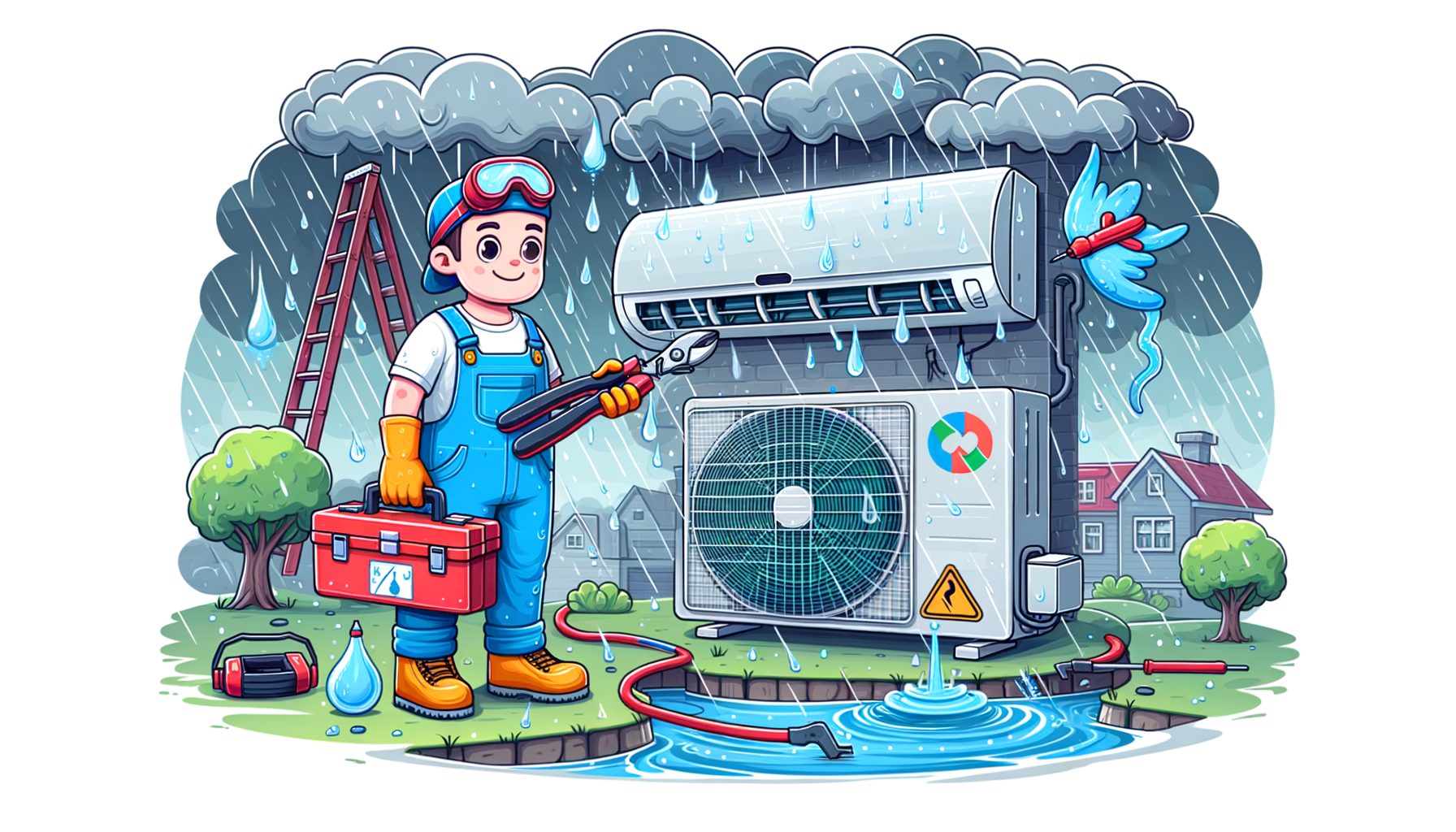
Puddled streets and spiking humidity force even robust air conditioners to work harder. Rainy Season Air Conditioner Care isn’t optional; it’s core maintenance that keeps cooling efficient, safe, and mold-free. In this guide, you’ll see how wet weather stresses your AC, how to shield it with a practical checklist, and clever ways to cut energy costs while guarding indoor air. If your climate delivers monsoons, a wet season, or weeks of steady rain, the tips below help your system perform at its best—no wasted money and fewer breakdowns.
Why the rainy season is hard on your AC (and what to do about it)
Moisture acts as a quiet saboteur. As outdoor humidity climbs, your AC must strip water from the air before it can cool it. The workload jumps. Runtime stretches, energy use rises, and even a partly clogged condensate line can’t keep up. The fallout can be leaks, musty odors, a frozen coil, or short cycling. Many homeowners assume rain itself harms equipment; in reality, outdoor condensers are built to run in showers. The larger threats are indirect: saturated soil splashing grit into the unit, storm-driven leaves choking airflow, pests ducking into the cabinet for shelter, and—what’s interesting too—power surges sparked by lightning or grid hiccups.
High humidity also feeds mold and bacterial growth on the evaporator coil and in the drain pan, which explains the “gym bag” smell. Public health guidance points to 40–60% indoor relative humidity to curb mold and improve comfort. Push past 60% during the rainy season and you’ll see longer runtimes, clammy rooms, and higher bills—unless airflow, filtration, and drainage are tuned ahead of time.
Electrical hazards deserve attention as well. Thunderstorms often trigger voltage spikes that can cook control boards and compressors. A whole-home or dedicated AC surge protector costs little compared with a four-figure compressor swap. In flood-prone neighborhoods, the risk shifts: standing water around an outdoor unit can bend fan blades, corrode parts, and contaminate bearings. If floodwater ever reaches electrical components, don’t restart the system until a licensed technician inspects it.
Air quality matters more when windows stay shut. Cooking, showers, and indoor laundry add moisture on top of the weather’s load. Without rainy-season care—clean filters, clear drains, correct fan settings, and dehumidification—the AC chases comfort inefficiently. The upside: a few simple, scheduled actions slash risk, freshen air, and extend system life.
A step-by-step rainy season maintenance checklist
Here’s a practical checklist to keep your AC safe, efficient, and dry when the rains arrive. It works for central air, ducted/ductless mini-splits, and window units; just adjust steps to match your equipment.
1) Clean or replace filters every 2–4 weeks. Wet weather spreads more particulates and accelerates gunk buildup. A clogged filter starves airflow, lets the evaporator run too cold, and may cause icing. Use the manufacturer’s recommended filter type; if you jump to a higher MERV, verify your system can handle it without choking airflow.
2) Clear the condensate drain line. A top rainy-season failure point, plain and simple. Turn off power, locate the drain line at the indoor unit, and pour a cup of distilled vinegar (or manufacturer-approved cleaner) into the access tee. Outside, confirm a steady drip during cooling. If the line is slow, use a wet/dry vacuum on the exterior drain for 1–2 minutes. Then this: consider installing a float switch that shuts the system off before a pan overflow becomes a ceiling leak.
3) Inspect the drain pan and coil. With power off, remove the panel and check for standing water, slime, or rust. Clean the coil gently with a soft brush and a no-rinse coil cleaner designed for evaporators. Avoid harsh chemicals or high-pressure water that can bend fins. Add one drain tablet (per manufacturer guidance) to inhibit algae growth.
4) Protect the outdoor unit’s airflow. Trim vegetation to maintain 24–60 cm of clearance on all sides and at least 1 m overhead. After storms, remove leaves and twigs. Do not wrap the condenser in a tight cover while operating; it traps moisture and restricts airflow. If your climate has days-long deluges, a breathable top shield is fine—but remove it before running the AC.
5) Check electrical safety. Install a surge protector (whole-home or dedicated) and ensure your disconnect box is sealed from wind-driven rain. If breakers trip repeatedly, stop and call a pro; persistent trips indicate deeper issues (shorts, failing capacitors, or compressor trouble).
6) Optimize controls. Enable “Dry” mode (on mini-splits) during muggy days with mild temperatures; it prioritizes dehumidification at lower energy use. For central systems without Dry mode, set the thermostat to “Auto” fan (not “On”) to allow moisture to drain between cycles. Aim for 40–60% indoor RH.
7) Window and portable units. Tilt window ACs slightly outward so rain and condensate drain outside. Check the foam seals and reinstall if water seeps in. Vacuum the rear coil fins carefully and keep the exterior weep holes clear.
Well, here it is—a quick reference for common rainy-season tasks.
| Task | Frequency (Rainy Season) | Typical Time | DIY Cost | Benefit |
|---|---|---|---|---|
| Filter clean/replace | Every 2–4 weeks | 5–10 min | Low ($5–$25) | Better airflow, lower energy use |
| Condensate drain flush | Monthly | 10–15 min | Low ($2 vinegar) | Prevents leaks and shutdowns |
| Outdoor unit debris check | After storms | 10 min | Free | Prevents overheating |
| Surge protection | One-time install | 1–2 hrs (pro) | Moderate | Saves electronics from spikes |
| Coil/pan inspection | Monthly | 15–30 min | Low | Stops mold, improves cooling |
Pro tip: Book one professional tune-up before peak rainy months. A technician can measure static pressure, refrigerant charge, superheat/subcooling, and catch small issues before they become emergency callouts.
Defeat mold, odors, and damp air indoors
When your home feels “cool but clammy” during the rainy season, you’re not imagining it. Excess moisture slows sweat evaporation on your skin, so 25°C can feel like 28–29°C. Comfort improves with moisture control, not just a lower temperature. Start by tracking indoor humidity with an inexpensive hygrometer; aim for 40–60% RH. If readings hover above 60% even with the AC running, use these steps.
Calibrate settings for dehumidification. On mini-splits, Dry mode shines when it’s humid but not very hot. On central systems, keep the fan on Auto so moisture condenses on the coil and drains during off-cycles; the constant Fan On setting can re-evaporate water and make rooms feel damper. If your thermostat supports dehumidification control (some smart stats do), set a target RH alongside your temperature.
Improve filtration and keep air moving. A clean filter and unobstructed supply/return vents help the coil reach the right temperature to condense moisture efficiently. For ducted systems, consider a MERV 8–11 filter to balance particle capture and airflow; higher MERV numbers are not always better if your blower can’t handle the resistance. Use ceiling fans to boost perceived cooling without lowering the thermostat—each 1°C increase can cut AC energy use by roughly 3–5% when airflow is good.
Stop moisture at the source. Run exhaust fans during showers and 10–15 minutes after. Keep lids on simmering pots. Avoid drying laundry indoors during rainstorms if possible. Seal obvious air leaks (door sweeps, window weatherstripping) that let wet outdoor air creep in. If your climate is extremely humid, a standalone dehumidifier in problem rooms or basements can take the edge off and reduce AC runtime.
Handle odors safely. That musty smell often comes from biofilm on the evaporator coil or in the drain pan. Use a manufacturer-approved coil cleaner; avoid bleach on coils or mixed chemicals that produce fumes. Drain tablets can suppress algae growth. If odors persist, consider a UV-C coil light installed by a pro—its job is to keep the coil surface cleaner between service visits. Also inspect ductwork for wet insulation or leaks that pull in damp attic or crawlspace air.
Think prevention. Keep indoor RH in range, service the drain monthly, and don’t ignore early signs like water noise in the air handler, drips near supply vents, or a sweet/dirty-sock odor at startup. The faster you respond, the less chance mold has to take hold—and the better your AC will perform all season.
Save energy and protect your wallet when it pours
Rainy weather can nudge bills up because your AC works longer to pull moisture from the air. Smart settings and a few upgrades can offset that extra load. Start with temperature: try 24–26°C indoors with good airflow. Combine that with ceiling fans and you’ll feel comfortable at higher setpoints, trimming energy use by a few percent per degree. If your unit offers an Eco or Dry mode, use it during humid-but-mild days to prioritize moisture removal over aggressive cooling.
Automate what you can. A smart thermostat or smart mini-split controller can use schedules, occupancy sensing, and humidity targets to minimize waste. For example, set a slightly higher temperature when you’re away, but keep dehumidification active to prevent mold. Avoid large swings; extreme setbacks can force long, inefficient recovery cycles in very humid weather.
Keep airflow healthy. Open and clean supply/return grilles, leave interior doors slightly ajar for pressure balance, and don’t block vents with furniture. Good airflow reduces runtime and keeps coils in an efficient operating range. Outdoors, make sure storm-driven debris isn’t choking the condenser. Even a 10% reduction in airflow can raise energy use and wear.
Shield the system from power problems. Storms bring brownouts and surges that can silently shorten component life. A surge protector is a one-time investment that prevents expensive failures of boards and compressors. In regions with frequent outages, consider a soft-start device for certain systems or consult a pro about voltage conditioning.
Think ROI on maintenance. Cleaning coils, flushing drains, and replacing filters are low-cost tasks that pay back quickly. Industry and government resources note that proper maintenance helps systems run closer to design efficiency; neglect leads to higher energy consumption for the same comfort. Sealing obvious duct leaks in accessible areas can also be a rainy-season win, especially if your return duct pulls air from damp spaces.
Stage comfort by room. If you have a multi-zone mini-split, run the zones you’re using and set others a bit higher. For central systems, resist closing too many registers; it can increase static pressure and reduce overall efficiency. Instead, manage humidity and airflow across the whole home. The result is a drier, more comfortable space with lower bills—rain or shine.
FAQs: Rainy season AC care
Q: Is it safe to run my AC during heavy rain?
A: Yes. Outdoor condensers are weatherproof and designed to operate in rain. The bigger concerns are flooding, debris, and power surges. If water rises around the unit or breakers trip, shut it down and call a professional.
Q: Why is water leaking from my indoor unit?
A: Most rainy-season leaks trace back to a clogged condensate drain line or an overflowing drain pan. Flush the line with vinegar, vacuum the exterior drain, and check for a stuck float switch. Persistent leaks call for professional inspection to rule out coil icing or improper installation.
Q: Should I cover my outdoor unit when it rains?
A: Not while it’s running. A tight cover traps moisture and blocks airflow. A breathable top shield during long idle periods is okay, but remove it before operation. In storm prep, focus on clearing debris and securing loose items nearby.
Q: What humidity should I target indoors?
A: Aim for 40–60% relative humidity. Above 60% increases mold risk and discomfort. Use Dry mode (if available), keep the fan on Auto, manage moisture sources, and consider a dehumidifier for very humid climates.
Conclusion: keep cool, stay dry, and make your AC last longer
Rainy weather puts unique pressure on your air conditioner: higher humidity, longer runtimes, and greater risk of mold, leaks, and electrical issues. You’ve seen why wet weather challenges your system and how to respond with a simple, high-impact routine: clean filters, flush the condensate drain, keep outdoor airflow clear, protect against surges, and optimize your settings for moisture control. You also have tactics to beat that “cool but clammy” feeling, stop odors safely, and save money by improving airflow and using smart controls. Small steps, stacked together, deliver reliably drier air, lower energy bills, and fewer surprises when storms roll through.
Your move now. Pick one action from the checklist—flush the drain, inspect the coil, or set a humidity target—and do it today. Set a reminder to repeat it next month. If you’ve never had a pro tune-up before the wet season, book one now and ask the technician to verify airflow, drain slope, and surge protection. Don’t wait for a soaked ceiling or a burnt board to force your hand—prevention during rainy-season air conditioner care is easier and far cheaper than emergency repairs.
Comfort isn’t just a number on a thermostat; it’s the confidence that your home will feel fresh and dry no matter what the weather does. Stay proactive, stay curious, and treat your AC like the essential appliance it is. You’ll breathe easier, spend less, and sail through the wet season with fewer worries. Ready to start? Open your phone’s calendar, set your first maintenance reminder, and take back control of your comfort—one small step at a time. Which task are you checking off first today?
Helpful resources:
– U.S. Department of Energy – Energy Saver: https://www.energy.gov/energysaver/
– U.S. EPA – Indoor Air Quality: https://www.epa.gov/indoor-air-quality-iaq
– CDC – Mold Basics: https://www.cdc.gov/mold/
– ASHRAE – Humidity and comfort resources: https://www.ashrae.org/technical-resources
– National Weather Service (for local humidity/heat index): https://www.weather.gov/
Sources:
– U.S. Department of Energy. Energy Saver tips on cooling, airflow, and maintenance.
– U.S. Environmental Protection Agency. Guidance on indoor humidity and air quality.
– Centers for Disease Control and Prevention. Mold prevention basics.
– ASHRAE technical resources on thermal comfort and moisture control.