
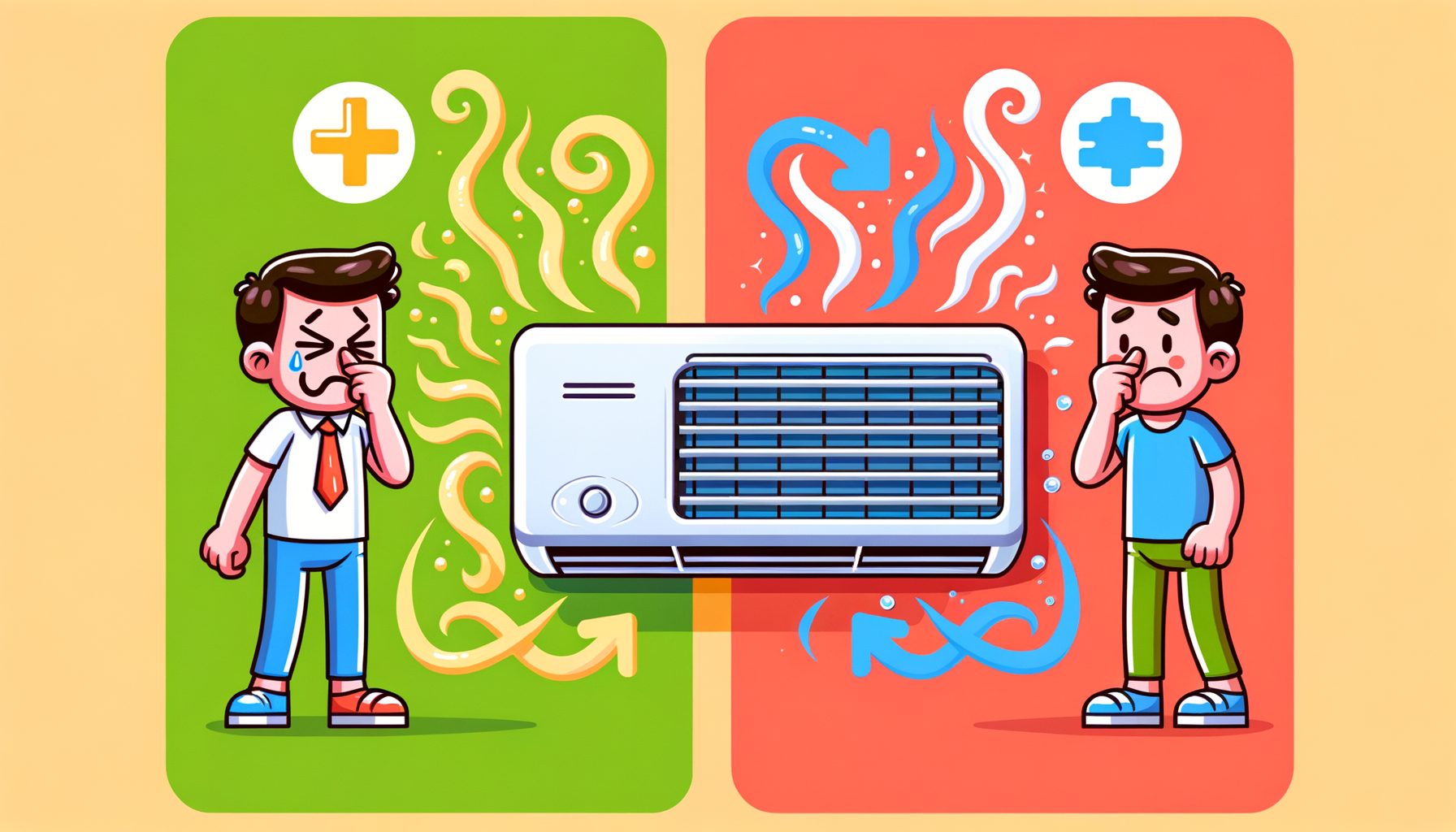
Bad AC smells aren’t just annoying—they can signal mold, bacteria, leaks, or electrical trouble that can hit both your health and your utility bill. You’ll get a clear, practical plan here to remove air conditioner odors quickly and keep them from returning. Whether you run central air, a ductless mini-split, or a window unit, you’ll see what each smell usually means, the safest DIY cleaning steps, and a simple routine to prevent future odors. If you’ve ever flipped on the air and wondered, “Why does my AC smell like feet, vinegar, or something burning?”, you’re in the right place.
Why Your AC Smells Bad: Common Odors and What They Mean
In many homes, bad AC odors start with moisture and organic buildup. The evaporator coil condenses humid air and leaves a damp surface that invites mold and bacteria. Dust turns into food for those microbes, and the dark, cool housing gives them a perfect hideout. That’s how the classic “musty” or “dirty socks” odor forms. Other scents point elsewhere: rotten eggs can mean sewer gas drawn in through a dry trap or a dead animal near the ducts; a burning smell may be overheated parts or dust burning off heat strips; a sweet or chemical note can, on rare occasions, hint at refrigerant issues or fumes from cleaners parked beside a return grille.
Well, here it is: a quick smell-to-cause map with first actions. Use the table for fast triage, then follow the step-by-step section to fix the root cause.
| Smell | Likely Source | Risk Level | Quick First Action |
|---|---|---|---|
| Musty / “Dirty socks” | Mold or bacterial biofilm on evaporator coil, drain pan, or blower | Moderate (irritation, allergies) | Turn unit off, check filter, clean coil/pan, flush drain line |
| Rotten egg | Sewer gas from dry trap, dead animal, or (if near furnace) fuel leak | High if gas; moderate otherwise | Ventilate; fill dry traps with water; if gas is suspected, leave and call your utility |
| Burning / Hot electrical | Overheated motor/wiring, dust burning off heat strips | High if persistent | Cut power; inspect; call a pro if it continues |
| Sour / Vinegar | Bacterial metabolism on coil or in the condensate drain | Low–moderate | Clean coil and drain; add extra drying time |
| Sweet / Chemical | Refrigerant traces or household chemicals near a return | Moderate | Move chemicals; if smell persists with weak cooling, call a pro |
Health is part of the story. The U.S. EPA reports that indoor air can be 2–5 times more polluted than outdoor air, and moisture issues can aggravate respiratory symptoms. If anyone at home has asthma, allergies, or a compromised immune system, deal with odors right away and skip harsh products that create fumes. For mold-specific guidance, the U.S. CDC has straightforward resources on dampness and mold (links at the end).
Takeaway: odors are signals. Musty or sour usually means it’s time to clean and dry the system. Burning or strong rotten-egg smells call for a safety check first. Then this: the next section walks you through odor removal without expensive chemicals or risky “deodorizer bombs.”
Eliminate AC Odors Fast: A Step-by-Step Fix
Before you begin, shut power to the system at the thermostat and, ideally, at the breaker. Gather a flashlight, screwdriver, soft brush, paper towels or microfiber cloths, a spray bottle with distilled white vinegar or a coil-safe cleaner, and a small wet/dry vacuum if available.
Step 1: Replace or wash the filter. Dirty filters breed odor and choke airflow, keeping the coil wet longer. For disposables, install a fresh filter—MERV 8 or higher if your system can handle it. Washable screens (common on mini-splits and window units) should be rinsed with warm water and mild dish soap, then air-dried completely before going back in.
Step 2: Clean the evaporator coil and drain pan. Access the indoor coil (behind a panel on central air handlers; behind the front cover on ductless and window units). Mist a coil-safe cleaner or a 1:1 vinegar–water mix onto the coil fins and into the drain pan. Bleach should not touch aluminum coils, and it must never be mixed with other cleaners. Allow 5–10 minutes of dwell time; gently wipe what you can reach. If you have a fin comb or soft brush, groom fins in line with the channels. Bent fins reduce airflow, so go easy.
Step 3: Unclog and sanitize the drain line. Smells thrive in a slimy drain. Find the condensate line (often PVC), remove the cap, pour in about 1/2 cup (120 ml) of white vinegar, then a cup of water. If a wet/dry vacuum is handy, attach it to the outside drain for 30–60 seconds to pull out sludge, then flush again with clean water. Monthly attention here keeps odors away.
Step 4: Clean the blower and housing. On ductless mini-splits, remove the front cover and wipe the blower wheel and interior surfaces with a damp cloth and mild detergent. Central air handlers benefit from dust removal in the blower cabinet and at the return grille. That step clears the film that traps odors.
Step 5: Dry the system. Moisture is the real enemy. After cleaning, run fan-only mode for 30–60 minutes to dry the coil and pan. Many units include a “dry” or “fan” mode—use it after heavy cooling or on humid days to discourage musty buildup.
Step 6: Deodorize without masking. Perfume sprays and ozone generators are not the answer—ozone can irritate lungs and degrade materials, and masking scents mingle with mustiness to create new odors. If you want extra protection, consider a UV-C coil light (mounted to shine on the coil) to suppress biofilm growth between cleanings; a pro should size and install it safely.
Window AC quick refresh: If it’s safe to remove, take the unit outside, pop the cover, and gently rinse the condenser coil (back side) from inside out with low hose pressure. Clean the evaporator, drain pan, and fan blades with coil cleaner. Let everything dry fully in the sun for a few hours before reinstalling. A slight outward tilt ensures proper drainage.
Sanity checks along the way: a burning smell or scorched wiring is your cue to stop and call a professional. If you suspect sewer gas (rotten eggs), make sure nearby floor drains have water in the traps—pour a liter into unused drains weekly. Any lingering vinegar scent will fade as the system dries and runs through a few cycles.
Prevent Smells Before They Start: Maintenance, Filters, and Humidity Control
Odor prevention comes down to airflow, cleanliness, and moisture control. Start with filters. Central systems usually do well with MERV 8–13, balancing filtration and airflow; very high MERV can choke airflow if the system wasn’t designed for it. Check monthly during heavy use and replace every 60–90 days (homes with pets, smoke, or dust may need monthly changes). Wash reusable screens on ductless and window units monthly and deep-clean coils each season.
Keep humidity in check. Aim for 40–60% indoor relative humidity. Above 60%, mold grows faster and musty smells return. A low-cost hygrometer can monitor humidity in living spaces and near the air handler. What’s interesting too: small changes help a lot—seal air leaks around doors and windows, run kitchen and bath exhaust fans for 20 minutes after use, set the AC fan to “Auto” (not “On”) so the coil can drain between cycles, and deploy a stand-alone dehumidifier in humid rooms.
Pay attention to the condensate drain. Each month, pour 1/2 cup of white vinegar into the drain access, followed by water, to deter algae. Make sure the line is sloped correctly and that the outdoor discharge isn’t blocked by mulch or insects. For attic air handlers, a float switch on the drain pan can shut the system down if the drain clogs—ask a technician to add one if it’s missing.
Plan seasonal cleanings. At the start of cooling season, clean the coil, pan, and blower. At season’s end, do a quick rinse and run fan-only to dry the system. Outdoors, keep at least 60 cm (24 inches) of clearance around the condenser and clear leaves and fluff from the coil. Cleaner outdoor coils shorten run times, keep the indoor coil drier, and can cut energy use. The U.S. Department of Energy notes that proper maintenance—including clean filters and coils—improves efficiency and performance.
Watch what’s near your return. Paints, solvents, and strong cleaners shouldn’t live beside return grilles—those fumes can be pulled in and recirculated. Vacuum dust from returns and nearby carpets, and keep pet bedding away from returns to limit odor sources.
Use thermostat features to your advantage. If your unit offers a “dry” mode or a post-cooling fan cycle, use it during humid months. Running the AC hard by day? Set a daily reminder to run fan-only for 30 minutes in the evening to dry the coil. Consistent, light maintenance beats emergency odor control every time.
When to Call a Professional and What It Should Cost
DIY works well for filters, coil cleaning, and drain maintenance. A licensed technician should step in when odors point to risk. Call a pro if a burning or electrical smell persists after shutdown; you see arcing, melted plastic, or scorched circuits; cooling drops while a chemical smell appears; you find heavy mold in a central air handler or deep in ductwork; you detect rotten eggs near a gas furnace or utility room; or odors return within days of a careful cleaning.
What to expect and typical costs: A diagnostic visit often runs $75–150 (varies by region). Professional evaporator coil cleaning is commonly $150–400 for accessible systems, higher for complex attic installs. Clearing a drain line is often $100–200. UV-C coil light installation usually falls between $300–700, including fixture and power. Duct cleaning ranges widely ($400–1000+). It can help with visible dust/mold, pests, or heavy renovation debris, but it isn’t a cure-all. The U.S. EPA recommends duct cleaning only for substantial visible mold, infestations, or clogged ducts—ask for photos and an explanation before you agree.
Choosing the right contractor matters. Look for technicians certified by groups such as NATE (U.S.) or local equivalents. Request before/after photos of the coil and drain pan. Ask for an itemized estimate and the names of any chemicals or cleaners—coil-safe, non-corrosive products are best. If someone proposes ozone generators to “sanitize” your air, decline and review the EPA’s guidance on ozone and air cleaners. For safety: if you suspect a natural gas leak (sulfur/mercaptan odor), leave the area and call your gas utility. For sewer gas, a licensed plumber can restore trap seals and fix venting.
A good technician will also verify airflow, refrigerant charge, and thermostat controls. Solving root causes—like low airflow from an overly restrictive filter or a weak blower—prevents the moisture buildup that starts odor problems.
Q&A: Fast Answers to Common AC Odor Questions
Q: Is bleach okay in the AC drain or on coils? A: Use bleach only in the drain line if the manufacturer permits it, and never mix it with vinegar or ammonia. Bleach should not be used on aluminum coils—it can corrode metals. White vinegar or coil-safe cleaners are safer for coils.
Q: After cleaning, how long until a musty smell is gone? A: When the filter, coil, pan, and drain are cleaned and you run fan-only for 30–60 minutes, most musty odors fade within a day of normal operation. If the smell lingers, remaining biofilm or a hidden moisture issue is likely.
Q: Will duct cleaning eliminate AC smells? A: Sometimes, but most odors start at the evaporator coil, drain pan, or blower. Clean those first. Consider duct cleaning only if you see visible contamination, pests, or heavy dust—verify with photos.
Q: Can refrigerant leaks smell sweet or chemical? A: Some people notice a sweet or chloroform-like scent with certain refrigerants, though many leaks are odorless. If cooling drops or you hear hissing/see oily residue, shut the system off and call a licensed technician.
Conclusion: Breathe Easier Today—Simple Actions, Big Results
Bad AC smells usually trace back to moisture, dust, and neglected parts that let microbes flourish, while unusual odors can flag safety problems. You’ve seen how to decode each scent, clean the key components (filter, coil, drain, blower), and build a prevention routine around humidity control and regular maintenance. You also know when to call a pro and what fair pricing looks like, so you can respond quickly and confidently.
Your move now: take five minutes to check the filter. If it’s gray or fuzzy, replace or wash it. Next, schedule a 30-minute deep clean this week—wipe the coil housing, flush the drain with vinegar, and run fan-only to dry the system. Set a monthly reminder to keep the drain clear and a seasonal reminder to rinse the coil. If a burning or rotten-egg smell ever shows up, power down and call a professional right away.
Small steps protect your lungs, boost efficiency, and keep your home smelling fresh—no pricey gadgets or mystery sprays required. Share this guide with a friend battling “dirty socks” air, and bookmark it for your next maintenance day. Fresh, clean air is closer than you think: one filter, one flush, one fan cycle at a time. Ready to start with that filter check right now?
Helpful Resources and Sources:
– U.S. EPA: Indoor Air Quality Basics – https://www.epa.gov/indoor-air-quality-iaq/inside-story-guide-indoor-air-quality
– U.S. CDC: Dampness and Mold Health Effects – https://www.cdc.gov/mold/dampness_facts.htm
– U.S. DOE Energy Saver: Maintaining Your Air Conditioner – https://www.energy.gov/energysaver/maintaining-your-air-conditioner
– ENERGY STAR: How to Choose a Heating and Cooling Contractor – https://www.energystar.gov/home-improvement/hvac/working-contractor
– U.S. EPA: Should You Have the Air Ducts in Your Home Cleaned? – https://www.epa.gov/indoor-air-quality-iaq/should-you-have-air-ducts-your-home-cleaned
– U.S. EPA: Ozone Generators Sold as Air Cleaners – https://www.epa.gov/indoor-air-quality-iaq/ozone-generators-are-sold-air-cleaners