
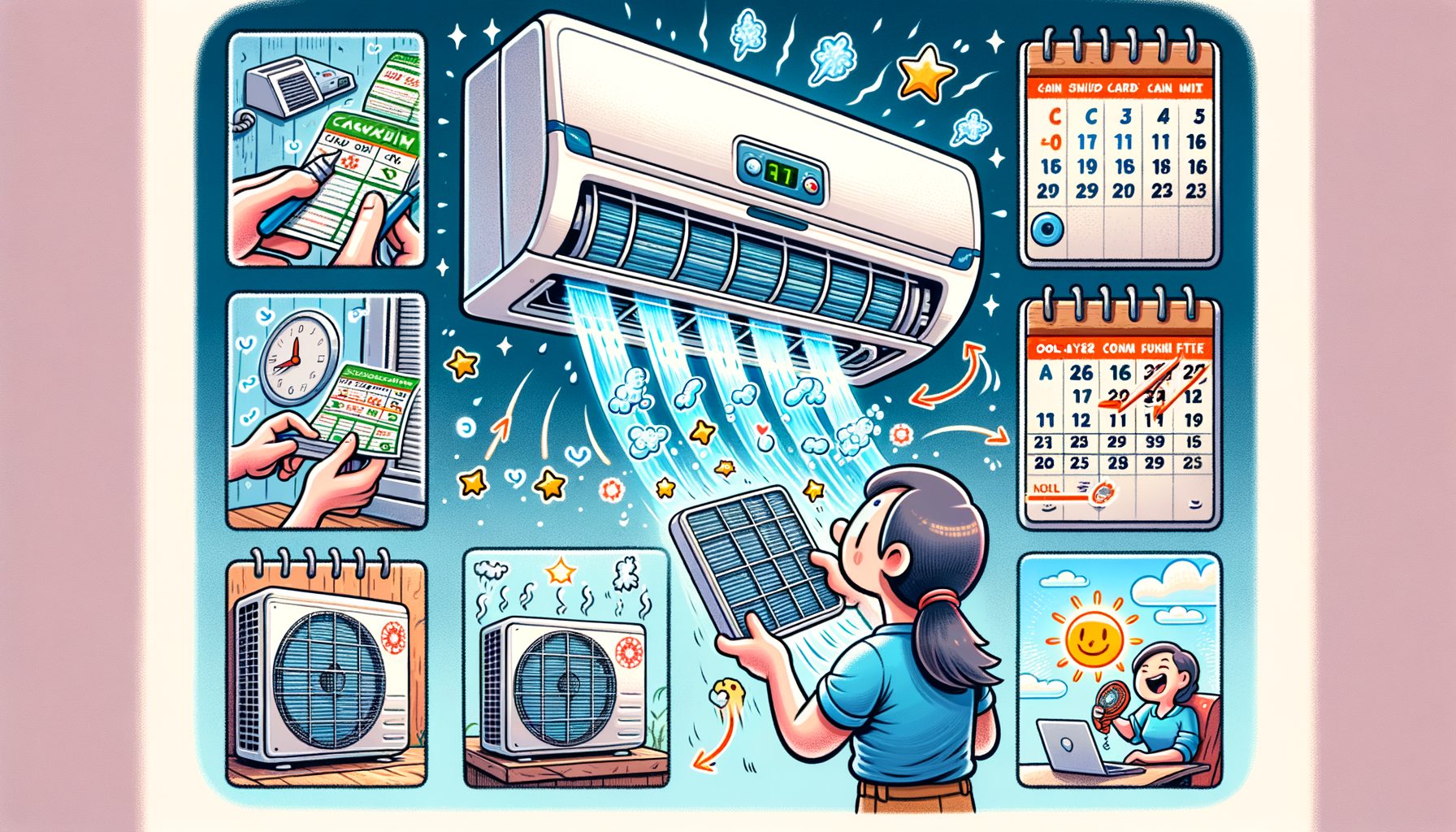
You feel it every summer: rooms that won’t quite cool, allergy flare-ups, and an energy bill that keeps creeping up. Often, the culprit is a tired, clogged filter. Wondering how often to change air conditioner filters for peak performance is common. It’s a simple but important balancing act—wait too long and you waste money and stress the system; switch too soon and you overspend on supplies. The good news is straightforward: with a clear schedule, a couple of quick checks, and the right filter, you can boost comfort, trim energy costs, and extend your AC’s life with just a few minutes each month.
Use this guide to see when to change your AC filter in real-world terms, which factors shift the timeline, how to pick the right MERV without choking airflow, and how to swap a filter safely. Guidance applies to central AC, mini-splits, and window units. Expect neutral language and data-backed tips so you can act with confidence today.
The Simple Rule: How Often to Change Your Air Conditioner Filter
Want the quick, reliable answer? Well, here it is: check your air conditioner filter once a month, and replace it at least every 60 days during heavy use. That rhythm keeps airflow strong and helps the system run efficiently. Many homeowners settle into a 60-day cadence for typical 1–2 inch pleated filters in homes without pets or allergies. If your AC runs only occasionally—vacation homes or mild climates—you may be fine at 90 days, but make monthly checks a habit so problems don’t slip by.
Why monthly checks? Loading isn’t uniform. A pollen surge, wildfire smoke, a dusty week of home projects, or a heatwave’s extended runtime can clog a filter faster than expected. A visual inspection takes seconds: if it looks gray, fuzzy, or blocks most light, it’s time. For mini-splits and many window units, the primary screen is washable—plan to rinse monthly in cooling season, and more often if it looks dusty.
There’s real money on the line. The U.S. Department of Energy reports that replacing a dirty filter can cut energy consumption by about 5–15 percent because clean filters reduce resistance and let your system cool more efficiently. That routine also eases strain on the blower motor and compressor, lowering breakdown risk and extending system life. Source: U.S. Department of Energy (see resources below) and ENERGY STAR guidance on routine HVAC maintenance.
Quick baselines you can use right now:
– Central AC with 1–2 inch pleated filter: check monthly; replace every 60 days in season.
– Thicker 4–5 inch media filter: check monthly; often lasts 3–6 months (follow the label and your system’s needs).
– Mini-split or window unit: rinse the washable screen monthly; replace any optional fine filters per the manufacturer (commonly 6–12 months).
When in doubt, check more often and decide based on what you see.
What Changes the Schedule: Home, Climate, and Usage Factors
While “check monthly, replace by 60 days” works for many households, the ideal schedule depends on your home, climate, and habits. Anything that increases particle load or runtime shortens filter life. Light occupancy or mild seasons can stretch intervals. Use the adjustments below to fine-tune your routine.
Consider these common factors and how they affect replacement frequency:
| Factor | Suggested Adjustment | Why It Matters |
|---|---|---|
| Pets (shedding) | Replace every 30–45 days | Pet hair and dander load filters quickly |
| Allergies/asthma | Use higher MERV; replace every 30–60 days | Finer filters trap more pollen and dust |
| Smoking/vaping indoors | Replace every 30 days | Aerosols and fine particles clog filters |
| Large household | Replace every 30–45 days | More foot traffic = more dust |
| Urban pollution/wildfire season | Check weekly; replace as needed | Fine smoke and soot saturate filters fast |
| Renovations (sanding, drywall) | Daily checks; consider a temporary pre-filter | Construction dust overwhelms filters |
| Long cooling season/high runtime | Replace more frequently (every 30–45 days) | More hours running = more air filtered |
| Thicker filters (4–5 inch) | Often 3–6 months, but check monthly | Larger surface area lasts longer |
| Vacation/low occupancy | Up to 90 days (still check monthly) | Less dust and lower runtime |
Real-world example: A family of four with two cats in a hot, dusty region tried pushing filters beyond 45 days and saw higher bills and more sneezing. After switching to a mid-high MERV pleated filter and setting a 30–45 day cadence in summer, their electric bill dropped about 8 percent over two cycles and the home felt noticeably fresher. Your results will vary, but the pattern is consistent: steady checks beat guesswork.
Also note that fan settings affect wear. Running the fan “On” continuously filters more air (great for mixing and comfort), yet it loads the filter faster than “Auto.” Prefer “On”? Shorten your replacement interval.
Choosing the Right Filter: MERV Ratings, Materials, and Airflow Trade-offs
Picking the right filter means balancing strong particle capture for health and cleanliness against airflow resistance that can burden your system. The common rating is MERV (Minimum Efficiency Reporting Value), which ranges from 1 to 16 for residential filters. As MERV rises, smaller particles are captured, and resistance can increase unless the filter has ample surface area and the system is designed to handle it. Always check your equipment manual, and consult a pro if you’re unsure about static pressure limits.
| MERV Level | Captures | Typical Filter Type | Usual Replacement | Notes |
|---|---|---|---|---|
| 1–4 | Lint, large dust | Fiberglass | 30 days | Low cost, minimal filtration |
| 5–8 | Dust, pollen, mold spores | Pleated | 60–90 days | Good airflow; a solid baseline |
| 9–12 | Fine dust, pet dander, some smoke | Denser pleated | 45–60 days | Better for allergies; watch airflow |
| 13 | Smoke particles, bacteria, fine aerosols | High-efficiency pleated | 30–60 days | ASHRAE supports MERV 13 for improved IEQ; verify system compatibility |
Key tips for matching filter to system:
– Want higher MERV without choking airflow? Consider a thicker media cabinet (4–5 inch) that increases surface area and lowers pressure drop.
– If the system is older or undersized, a jump straight to MERV 13 may reduce airflow too much. Start with MERV 8–11 and monitor comfort, noise, and energy use.
– Mini-splits rely on washable mesh screens by default; some offer add-on fine filters. Follow the manufacturer’s interval to avoid airflow issues.
For credible guidance, review these resources:
– ASHRAE on filtration and indoor air quality: ASHRAE Filtration and Disinfection
– EPA’s consumer guide to air cleaners and filters: EPA: Guide to Air Cleaners in the Home
– ENERGY STAR HVAC maintenance tips: ENERGY STAR: HVAC Maintenance
Step-by-Step: Check and Replace Your AC Filter Like a Pro
Swapping a filter typically takes five to ten minutes. Follow this safe, repeatable process to avoid mistakes and keep airflow strong.
1) Turn off the system. Switch your thermostat to Off so the blower won’t pull unfiltered air while the filter is out.
2) Find the filter. Common locations:
– Central AC: behind the return grille in a hallway or inside the furnace/air handler compartment.
– Mini-split: under the front panel of the wall unit (usually two washable mesh screens).
– Window unit: behind the front grille.
3) Note size and airflow direction. The frame lists the size (e.g., 16x20x1). Most disposable filters include an arrow for airflow—point it toward the blower or air handler.
4) Inspect. Hold the filter up to a light. If it looks gray and fuzzy, if light is tough to see, or if dust buildup is obvious, replace it (or wash, if reusable). Mini-split screens should be rinsed with lukewarm water; avoid harsh detergents. Let them dry fully before reinstalling.
5) Replace or reinstall correctly. Seat the filter flat, with no gaps around edges. Gaps allow dirty air to bypass the filter and foul the coil. For disposable filters, write today’s date on the frame.
6) Restart and listen. Turn the system back on. A loud whistle or new airflow noise can mean the filter is too restrictive or not sealed well. Recheck alignment or consider a lower-MERV or thicker (greater surface area) option.
7) Set smart reminders. Create a recurring calendar event, enable filter reminders in your smart thermostat if available, or use a subscription service to deliver replacements on schedule. Busy households benefit from a monthly check reminder even if replacement is every 60 days.
Pro tips:
– Never run your system without a filter—it can quickly clog the evaporator coil.
– During renovations, use a cheap pre-filter at the return (replace daily) and keep doors closed to construction zones.
– If rooms feel stuffy after a filter upgrade, your system may be airflow-limited. Step down one MERV level or consider a thicker media cabinet with professional guidance.
FAQs: Quick Answers on AC Filter Replacement
Q1: What happens if I don’t change the filter?
A: Airflow drops, which forces the blower to work harder and can cause the coil to freeze, rooms to feel uneven, and energy use to rise. Over time, dust bypass can clog the coil, reduce system capacity, and lead to costly repairs. A clean filter is cheap insurance against all of that.
Q2: Are washable or reusable filters good?
A: Washable mesh screens are standard in mini-splits and many window units and work well when cleaned regularly. For central AC, reusable filters vary widely. Some offer modest filtration with low resistance; others can be restrictive or ineffective if not cleaned perfectly. If you go reusable, follow the cleaning schedule strictly and verify airflow. For most central systems, a quality pleated disposable filter offers reliable performance and convenience.
Q3: Can a higher MERV filter damage my AC?
A: Indirectly, yes—if the filter is too restrictive for your system, static pressure increases, airflow drops, and parts can wear faster. The solution is to match MERV to your system’s capability or increase filter surface area (e.g., a 4–5 inch media cabinet) so you get better filtration without a big pressure penalty. When upgrading, monitor comfort, noise, and energy use, and consult your HVAC pro if unsure.
Q4: How do I know my system’s maximum MERV?
A: Check your air handler or furnace manual and the filter cabinet label. Many residential systems handle MERV 8–11 easily. MERV 13 is often achievable with proper design (especially with thicker media). If documentation is unclear, a technician can measure static pressure before and after installation to confirm it’s within safe limits.
Q5: Do I need a different schedule in summer vs. winter?
A: Yes, if your system also heats or if your cooling season is long. Replace more frequently during high-use months (summer for cooling, winter for heating with a shared filter), and you may extend intervals during shoulder seasons. Still, keep monthly checks year-round so surprises don’t slip through.
Conclusion
Bottom line: filters are small, yet they control a big share of your comfort, health, and energy costs. By checking monthly and replacing at least every 60 days during heavy use, you’ll keep airflow strong, protect your equipment, and breathe easier. When life gets dusty—pets, allergies, smoke, renovations—shorten that schedule. If your system and filter allow more surface area (like a 4–5 inch media cabinet), you can often extend intervals, but only with regular inspections. Pair that routine with a MERV level your system can handle, and you’ve solved most common AC performance problems.
Take action now. Walk to your return grille or air handler, peek at your filter, and decide: replace today or set a reminder for the same date next month. Ready to upgrade? Consider a higher MERV pleated filter that your system supports, or talk to a local pro about adding a thicker media cabinet for better filtration with less resistance. Enable reminders on your thermostat, date the filter frame, and keep a spare on hand so changes aren’t delayed.
If this helped, share it with someone battling stuffy rooms or rising energy bills—simple habits really pay off. And if your area is dealing with pollen or wildfire smoke, step up to MERV 11–13 (if compatible) and shorten your schedule until the air improves. Your lungs—and your AC—will thank you.
Small moves add up. One clean filter can lower bills, smooth out comfort, and protect your system all season long. When was the last time you changed yours?
Resources and further reading:
– U.S. Department of Energy – HVAC maintenance and filters: energy.gov/energysaver/maintaining-your-air-conditioner
– ENERGY STAR – Heating & cooling maintenance: energystar.gov/saveathome/heating_cooling/maintenance
– ASHRAE – Filtration and disinfection guidance: ashrae.org/technical-resources/filtration-and-disinfection
– EPA – Guide to Air Cleaners in the Home: epa.gov/indoor-air-quality-iaq/guide-air-cleaners-home