
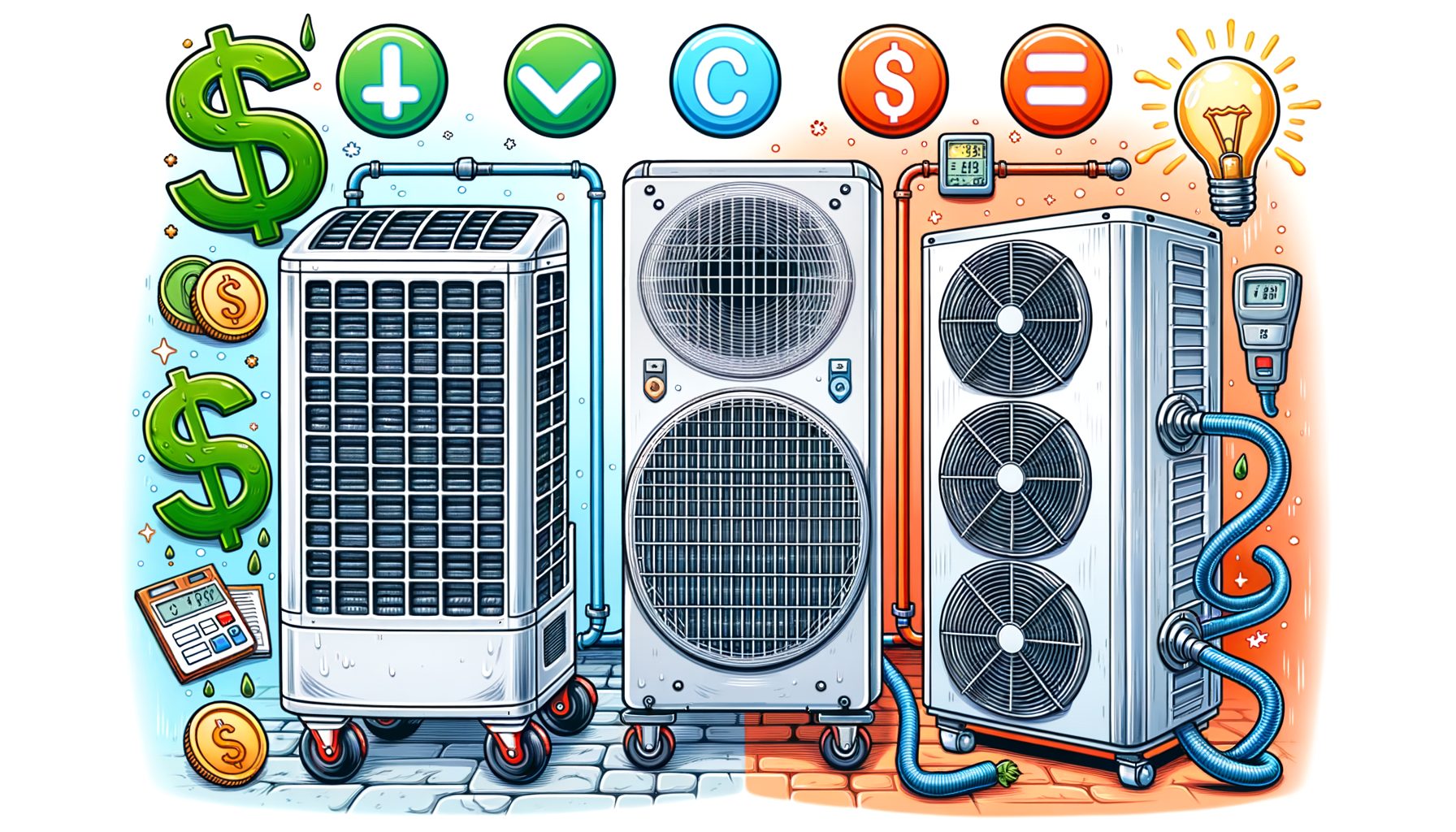
Choosing between a portable AC and a mini-split AC can feel overwhelming. The stakes are high: comfort, monthly bills, and even indoor air quality depend on that choice. Here’s a clear, practical breakdown of Portable vs Mini-Split AC so you can pick the right system for your space, budget, and climate. Whether you’re renting a studio or upgrading a home office, you’ll see how each option performs in real life, what it costs, and how efficient it truly is—without the hype, just the facts.
The Real Problem: Staying Cool Without Burning Cash or Energy
Cooling isn’t only about dropping the temperature anymore—it’s about doing it consistently, affordably, and responsibly. Electricity prices vary around the world, buildings differ, and summers are stretching longer and hitting harder. Many households just need cooling in one or two rooms, not the whole home, and they want the fastest route to relief without a giant bill or a construction project. That’s exactly where portable ACs and ductless mini-splits intersect.
Portable units promise plug-and-play convenience: roll one in, vent it out a window, and enjoy some cold air. Mini-splits aim for top-tier efficiency and comfort: a wall-mounted indoor unit, a quiet outdoor compressor, and zoned control. Both can cool a room, yet they do it in very different ways. The trick is matching the tool to the task. Renters may not be allowed to drill walls for a mini-split. Owners planning to stay might find a portable is a short-term fix that costs more to operate over time. Then this: details often surface after purchase—single-hose portables can pull hot air into your home, while mini-splits need proper sizing and installation to hit their efficiency potential.
The core questions stay simple: How fast do you need cooling? How long will you use it? How much are you willing to pay up front versus monthly? And what’s your space like—tight room, sunny windows, high humidity, or a well-insulated home? Your answers will steer you toward convenience-first (portable) or performance-first (mini-split). Below, you’ll see how each system works, what it costs, and how comfortable and efficient it can be—so you can choose with confidence.
Portable AC: Pros, Cons, Costs, and Best Use Cases
Portables win on ease. They’re simple to buy, move, and set up. In most cases, you unbox the unit, attach the exhaust hose, drop the window kit into place, and press “Cool.” For renters, students, or anyone needing a quick, temporary solution, that convenience is hard to beat. Many models fall between roughly 8,000 and 14,000 BTU (check the Seasonally Adjusted Cooling Capacity, or SACC, which is more realistic than older BTU labels). Purchase prices typically range from about $250 to $700 USD depending on brand, size, features, and whether it’s single-hose or dual-hose.
Performance and efficiency vary widely. Single-hose units exhaust air outdoors, which can draw warm, humid air from the rest of the home back into the room. Dual-hose models bring in outside air for the condenser through a second hose, reducing negative pressure and improving cooling. Look for the SACC rating (used in North America); it accounts for real-world heat infiltration. On average, a 10,000 SACC portable might draw roughly 900–1,200 watts while running. Use it 8 hours a day at $0.20 per kWh and you’re looking at about $43–$58 per month. In higher-cost regions, the total can climb quickly over a summer.
Noise deserves attention. Many portables run around 50–60 dB at close range—similar to conversation or a box fan. Fine for daytime, but some people notice it at night. Air quality differs, too; most models include basic washable filters for dust, yet they don’t actively bring in fresh air. In humid climates, you’ll also manage condensate—some self-evaporate, others need manual draining or a drain hose. Maintenance is straightforward: rinse or vacuum filters every few weeks, and occasionally clean coils and the condensate drain.
Where do portables shine? Short-term rentals, dorms, rooms with unusual windows that won’t take standard window ACs, and any situation where drilling isn’t allowed. They’re also great for spot-cooling—gaming setups, workshops, server closets, or guest rooms that need fast relief. The trade-offs: lower efficiency than mini-splits, more noise, and often higher operating costs over time. Still, when you need quick, flexible cooling with minimal setup and low upfront cost, a portable AC delivers.
Mini-Split AC: Pros, Cons, Installation, and Efficiency
Mini-splits tend to be the gold standard for efficient room-by-room cooling. Instead of pushing hot air through a hose, they move heat outside via refrigerant lines. The outdoor unit houses a variable-speed (inverter) compressor that ramps up and down to match your needs, while the indoor wall unit distributes cooled air quietly and evenly. Typical single-zone systems in the 9,000–18,000 BTU range can achieve high SEER2 or EER ratings with excellent real-world results—often using 30–50% less energy than a comparable portable for similar comfort. What’s interesting too: they excel at humidity control and stable temperatures, avoiding the “on/off blast” feel of many portables.
Costs come in two parts: equipment and installation. A quality single-zone mini-split might run $1,200–$3,000 for equipment, with professional installation adding $1,000–$4,000 based on region, line length, electrical work, and wall/roof penetrations. In many countries, a licensed installer must handle refrigerant and ensure safety. While the upfront investment beats a portable by a wide margin, the system usually pays off over time through lower monthly bills and greater durability. Many mini-splits also provide efficient heating (as heat pumps), which can offset winter costs in mild climates—sometimes a major bonus.
Noise levels are excellent. Indoor units commonly run 19–40 dB on low—quiet enough for bedrooms and studios—while the outdoor unit lives outside, cutting indoor noise. Air quality can improve as well: mini-splits circulate and filter indoor air without pulling hot air from other rooms. Some models add advanced filtration or dehumidification modes. Maintenance is simple but important: clean indoor filters monthly, keep the outdoor coil clear of debris, and schedule periodic professional service to check refrigerant pressures and coil cleanliness.
Installation requires planning. You’ll need a good wall location for the indoor head, a path for refrigerant lines and the condensate drain, and an outdoor spot with enough clearance for airflow. An installer will evacuate and charge the lines properly to preserve efficiency. If sized correctly (avoid oversizing), the unit will run at low speeds most of the time, saving energy and delivering steady comfort. Own your home or have a long-term lease? Value quiet, low operating costs, and optional heating? Well, here it is: a mini-split is a strong long-term choice.
Costs, Efficiency, and a Practical Decision Framework
Your decision often hinges on upfront cost versus ongoing cost and comfort. Portables are cheaper to buy and quick to deploy. Mini-splits cost more at the start but win on efficiency, noise, and monthly bills. Use the quick framework below:
1) Space and Control: Need to cool one small room temporarily? Portable AC. Need consistent comfort in a bedroom, office, or living room for years? Mini-split.
2) Building Rules: Can’t drill walls or place an outdoor unit? Portable AC. Owner with flexibility to install? Mini-split.
3) Climate and Usage: Hot, humid, long summers or daily use >6 hours? Mini-split tends to pay back faster. Mild climate or occasional weekend use? Portable may be sufficient.
4) Noise Sensitivity: Light sleeper or recording content? Mini-split is usually quieter.
5) Budget Timing: Tight cash now? Portable. Willing to invest for lower bills and better comfort? Mini-split.
Here’s a simplified cost snapshot for a typical 12 m²–20 m² room, assuming average electricity cost of $0.20/kWh and 8 hours/day usage over a month. Your local costs may differ; adjust with your rate per kWh.
| Factor | Portable AC (10,000 SACC) | Mini-Split (12,000 BTU, inverter) |
|---|---|---|
| Typical Upfront Cost | $250–$700 | $2,200–$5,500 (installed) |
| Approx. Power Draw | 900–1,200 W | 400–700 W (modulating) |
| Monthly Energy (8 h/day) | 216–288 kWh | 96–168 kWh |
| Monthly Cost @ $0.20/kWh | $43–$58 | $19–$34 |
| Noise (indoors) | ~50–60 dB | ~19–40 dB |
| Best For | Short-term, renters, quick setup | Long-term comfort, owners, quiet |
Consider two real examples. A renter in a temperate city who needs cooling for two months each year might spend $350 on a dual-hose portable and run it occasionally—perfectly reasonable. A homeowner in a hot, humid region using AC daily for 4–6 months will likely save money and enjoy better comfort with a mini-split over a few seasons. Also note that many mini-splits heat efficiently in winter, which can shift the math dramatically if you rely on expensive electric resistance heaters.
Final tip: whatever you choose, sizing and placement matter. Measure your room, add shading and insulation where possible, clean filters regularly, and seal gaps around windows and doors. Good basics can boost performance by 10–20% with either system.
FAQ: Portable vs Mini-Split AC
Q1: Are portable ACs really less efficient than mini-splits? A: Generally yes. Portable ACs, especially single-hose models, can pull warm air into the room and typically draw more power for the same cooling effect. Dual-hose designs and higher SACC ratings help, but mini-splits with inverter compressors are usually more efficient and quieter over long daily use.
Q2: Can I install a mini-split myself? A: In many regions, refrigerant handling must be done by licensed professionals. Improper installation can reduce efficiency, cause leaks, or void warranties. Some “DIY” kits exist with pre-charged lines, but check local codes and manufacturer policies. A proper vacuum, pressure test, and line routing make a big difference in performance.
Q3: What about heating? Do mini-splits work in winter? A: Many mini-splits are heat pumps and can provide efficient heating down to surprisingly low outdoor temperatures, depending on model. If you live in a mild or moderate winter climate, a mini-split can offset or replace other heating sources and improve overall energy costs.
Q4: How loud are these systems? A: Portables often measure around 50–60 dB in-room. Mini-split indoor units commonly run 19–40 dB on low fan settings, which feels much quieter in bedrooms and studios. Outdoor mini-split units are placed outside, further reducing indoor noise.
Q5: Which ratings matter most? A: For portables, look for SACC (Seasonally Adjusted Cooling Capacity) and consider dual-hose models. For mini-splits, SEER2 and EER indicate efficiency, while sound ratings indicate noise. Sizing is crucial for both—oversized units short-cycle and waste energy, while undersized units struggle on hot days.
Conclusion: Make the Right Cool Choice—Today
Quick recap. Portables deliver fast, flexible cooling with minimal setup and low upfront cost. They’re ideal for renters, temporary spaces, or occasional use. However, they’re usually louder and less efficient, which can raise monthly bills if you run them a lot. Mini-split ACs (ductless heat pumps) cost more to install but reward you with quiet operation, strong humidity control, and excellent efficiency—often cutting energy use by a third or more compared to a portable. If you own your home or plan to stay put, a mini-split is commonly the smarter long-term investment, especially in hot or humid climates and if you’ll use it daily.
Action plan for the next 24–48 hours: 1) Measure your room and note sun exposure and insulation. 2) Check building rules—can you install a mini-split? 3) Look up your electricity rate (price per kWh) and estimate monthly cost using the table above. 4) If a mini-split is viable, get at least three installer quotes and ask about efficiency ratings (SEER2), noise levels, and heating capability. 5) If you need a portable, prioritize dual-hose designs with high SACC and make sure the window kit seals well. Keep filters clean, and consider simple upgrades like blackout curtains and door sweeps to boost performance.
Your comfort doesn’t have to fight your wallet. With a clear understanding of how portable and mini-split systems work, plus real numbers for cost and performance, you can choose confidently. Start with your space, your rules, and your usage patterns. If speed and flexibility matter most, go portable. If you want quiet, efficient, long-term comfort, invest in a mini-split. You’ve got this—cooler days and better sleep are just one decision away. What’s the next step you’ll take to make your space feel great all summer long?
Helpful resources and further reading:
– U.S. Department of Energy: Room air conditioners and cooling tips – https://www.energy.gov/energysaver/room-air-conditioners
– ENERGY STAR guidance on cooling equipment – https://www.energystar.gov/products/heating_cooling
– Portable AC testing and SACC information – https://www.energy.gov/energysaver/portable-heaters-and-coolers
– ASHRAE thermal comfort overview – https://www.ashrae.org/technical-resources/standards-and-guidelines
– EPA refrigerants and climate information – https://www.epa.gov/climate-hfcs-reduction
Sources:
– U.S. Department of Energy (DOE) guidance on cooling efficiency and SACC
– ENERGY STAR product specifications for residential cooling equipment
– ASHRAE resources on comfort and HVAC best practices
– Manufacturer data sheets for representative portable and mini-split models