
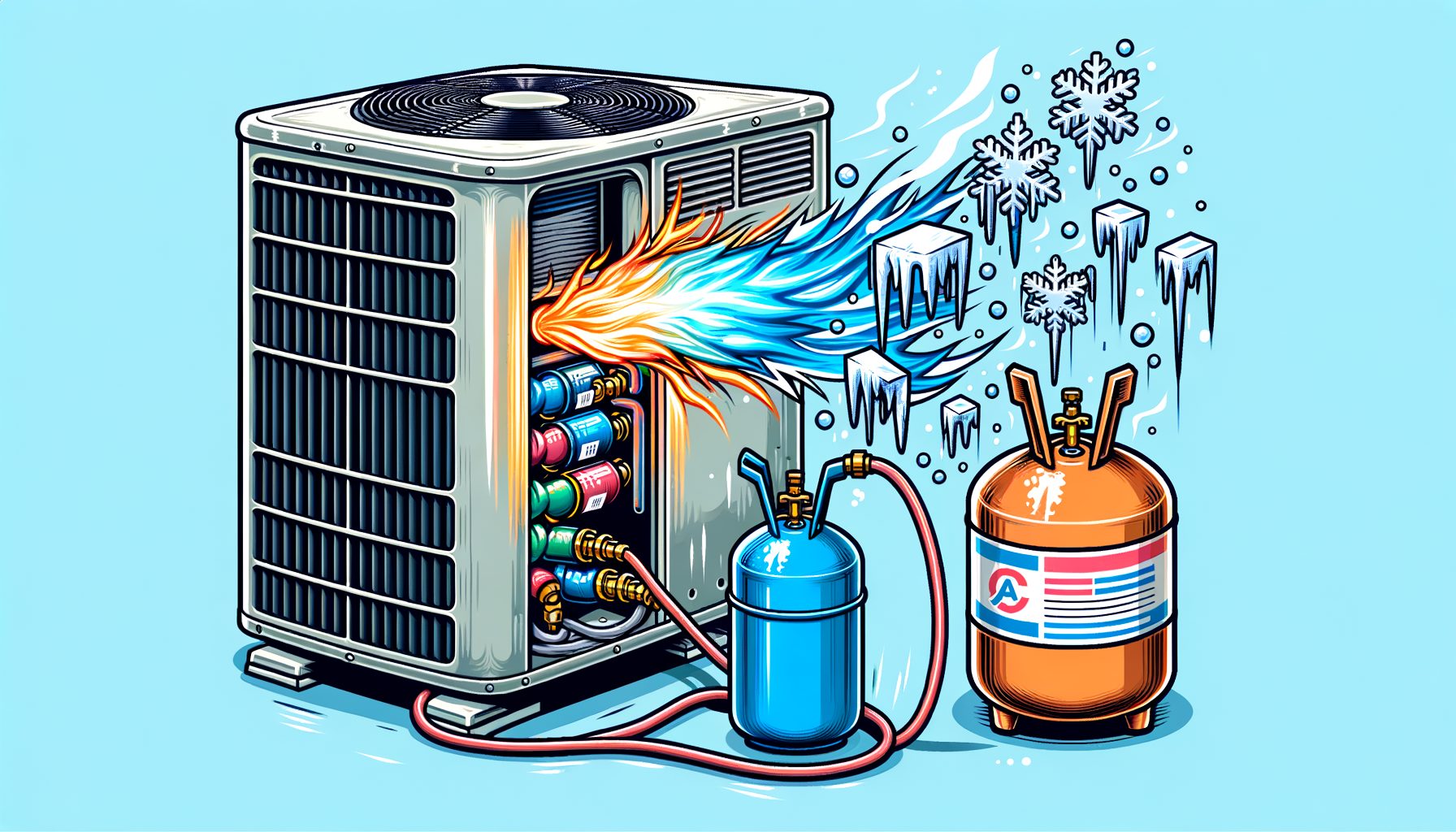
Your air conditioner hums along, yet the room stays sticky, warm, and—let’s be honest—a bit frustrating. The fan spins. The thermostat sits low. Comfort still refuses to show up. For many homes and small businesses, it’s time to ask a simple question: does my AC need refrigerant? When refrigerant is actually needed, a refill—technically a recharge—isn’t a mere top-up; it’s a safety, performance, and cost decision. Here’s the hook most people miss: refrigerant should never run out during normal use. Low level? A leak is almost certainly present. In the guide below, you’ll see why refilling matters, the signs to watch, the right steps to take, and how to head off future trouble—so you can decide wisely and get your cool back fast.
Why Refrigerant Matters: How Cooling Really Happens
Refrigerant is the lifeblood of your air conditioner’s cooling cycle. A specialized fluid, it circulates in a closed loop, absorbing heat indoors and releasing it outside. Inside, it evaporates at low pressure in the evaporator coil, stripping heat and moisture from the air. Outside, it condenses at high pressure in the condenser coil, pushing that heat into the outdoors. The cycle repeats every minute the system runs, which makes proper levels and pressures essential to comfort and efficiency.
Here’s the key point most people don’t realize: refrigerant is not like gasoline. You don’t “use it up.” In a healthy AC, it never needs to be refilled. If levels drop, there’s a leak—maybe a pinhole in a coil, a loose flare nut, or a damaged Schrader valve. Simply adding more without fixing the leak is like topping off a tire with a nail in it. You’ll pay for more refrigerant later, risk compressor damage, and possibly violate environmental rules in your country.
The charge level—how much refrigerant the system holds—must match your specific model. Run low and you’ll see poor cooling, ice on the indoor coil, and marathon run times. Overfill it and pressures climb, components get stressed, and efficiency can sink. Professionals dial in the charge using measured methods such as superheat and subcooling, and they weigh the refrigerant on a scale. The goal isn’t “more is better,” but “exactly right for the system.”
Why does a proper refill matter so much? Because a small leak today can grow into a major failure tomorrow. Low refrigerant starves the compressor of cooling and lubrication. Over time, that can burn out the compressor—among the most expensive parts to replace. In many regions, handling refrigerants is regulated (for example, under the U.S. EPA Section 608 and EU F-gas rules). Those rules protect the environment and ensure safe handling, since some newer blends are mildly flammable and older ones may have ozone or climate impacts. In short: if your AC needs refrigerant, you need a correct diagnosis, leak repair, and a precise recharge—not a guess.
Clear Signs Your AC Needs Refrigerant (and What They Mean)
Not every cooling problem traces back to refrigerant. Dirty filters, clogged coils, low airflow, or faulty thermostats can look similar. Yet certain patterns strongly suggest a low charge. If several show up at once, call a qualified HVAC technician for testing and leak detection.
Cooling takes forever, and the air is only slightly cool: With a thermostat set to 72°F (22°C) and the AC running non-stop without reaching it, low refrigerant may be limiting heat absorption. Long, inefficient cycles push energy bills up and wear components down.
Ice on the refrigerant line or evaporator coil: Check the copper suction line near the indoor unit. Frost or ice—especially in mild weather—often points to low pressure and low refrigerant. With less refrigerant, the coil can get too cold and moisture freezes. Airflow drops through the ice, and cooling suffers even more.
Hissing or bubbling sounds: A faint hiss at joints or valves can signal a leak. Bubbling may come from the metering device or the leak point itself. Oil stains on tubing or around fittings are another clue, since refrigerant oil can seep out with the leak.
Warm air at vents or a weak temperature drop: Use a thermometer to measure air at a return grille (air going in) and a supply register (cooled air coming out). A healthy split is often around 16–22°F (9–12°C), depending on system design and humidity. A low split can indicate undercharge—though airflow and coil cleanliness matter too.
Higher electricity bills with no clear reason: An undercharged system may run longer to deliver the same comfort. Even a modest efficiency loss adds up over weeks of hot weather. If your bill spikes compared to last year and weather is similar, refrigerant issues could be on the list.
Real-world example: In a midsize apartment during a humid summer, the indoor coil frosted over after 45 minutes. The filter was clean, and the blower speed was correct. After leak testing, the technician found a tiny pinhole at a brazed joint on the evaporator. The joint was repaired, the system was evacuated, and the exact factory charge was weighed in. The temperature split returned to normal, humidity control improved, and run time dropped—proof that the root cause was a leak, not “old age.”
Seeing these signs? Don’t keep running the system for days hoping it “gets better.” Ice and high compression ratios aren’t harmless—they can push the system toward a larger failure. Shut it off and schedule a professional check.
What To Do Next: Safe Diagnosis, Leak Repair, and the Right Recharge
Begin with quick checks you can handle: make sure the air filter is clean, supply and return vents are open, and the outdoor unit is clear of debris. If all that looks fine and the symptoms remain, it’s time for a qualified technician. In many countries, certification is required to handle refrigerant because of environmental and safety risks. A proper service visit should include three parts: diagnose, fix the leak, and confirm charge. Well, here it is in simple steps.
1) Diagnose: Pressures are measured, temperatures are logged, and airflow is verified. The technician calculates superheat and subcooling to assess charge level and system health. When undercharge is suspected, best practice is to check for leaks before adding refrigerant. Tools may include electronic leak detectors, UV dye with a follow-up inspection, soap solution for joints, and a nitrogen pressure test for stubborn cases. Expect a methodical process—the goal is to find the actual source.
2) Fix the leak: Depending on the cause, repairs can include tightening or re-flaring fittings, replacing Schrader cores, re-brazing a joint, or replacing a coil or line set. After repair, the system is evacuated with a vacuum pump (often to 500 microns or lower) to remove moisture and non-condensables. Skipping evacuation is a shortcut that hurts performance and can damage the compressor.
3) Recharge precisely: The correct refrigerant type and amount are non-negotiable. The charge is weighed in per the unit’s nameplate, then fine-tuned using the manufacturer’s method (weigh-in, superheat, subcooling, or a combination). Mixing refrigerants is dangerous and prohibited. If your system uses a phased-out or restricted refrigerant, options may be discussed—using reclaimed refrigerant, repairing and maintaining carefully, or planning a system upgrade.
Costs vary by region, refrigerant type, and leak complexity. Paying once for proper leak repair and a precise recharge almost always costs less than repeated top-ups that never solve the problem. It also keeps you compliant with local regulations and reduces environmental impact. The table below highlights common refrigerants you may encounter:
| Refrigerant | Typical Systems | Status | Approx. GWP (AR5) | Notes |
|---|---|---|---|---|
| R-22 | Older units (often pre-2010 in U.S.) | Phased out in many countries | ~1810 | Ozone-depleting; available as reclaimed only in many markets |
| R-410A | 2000s–early 2020s units | Being phased down in many regions | ~2088 | Widely used; cannot be replaced with R-32/R-454B without equipment change |
| R-32 | Newer split systems | Lower-GWP alternative | ~675 | A2L (mildly flammable); requires trained handling and compatible equipment |
| R-454B | Next-gen replacements for R-410A | Adopted by many manufacturers | ~466 | A2L; cannot be retrofitted into R-410A equipment |
Important: Always match the refrigerant to the unit’s label. Never retrofit a new refrigerant into equipment not designed for it unless the manufacturer explicitly approves and provides a kit. For legal and safety guidance, see resources from U.S. EPA Section 608, EU F-gas, and technical bodies like ASHRAE.
Preventing Future Leaks and Extending System Life
Winning the refrigerant battle isn’t a one-time repair—it’s a habit. Many leaks and performance issues can be prevented by focusing on airflow, cleanliness, and stability. Change or wash filters on schedule (often every 1–3 months, or as the manufacturer suggests). A clogged filter forces the evaporator coil to run too cold, encouraging frost and stress. Keep both indoor and outdoor coils clean; dust and debris block heat transfer and raise pressures and energy use. If your outdoor unit sits under trees or near a dryer vent, check it monthly.
Airflow matters as much as charge. Make sure supply and return vents aren’t blocked by furniture or curtains. During service, ask the technician to verify blower speed and static pressure. Poor duct design or crushed flex duct can rob your system of performance and mimic refrigerant problems. If you live in a coastal or industrial area, consider protective coil coatings and frequent rinsing to reduce corrosion—the enemy of coils and line sets.
Mechanical stability, electrical health, and proper installation lower leak risks too. Vibration can stress joints, so confirm that line sets are secured and isolated. Surge protection and correct voltage help compressors and fan motors run smoothly. If your system is older and uses a phased-out refrigerant, plan ahead: repairs may be possible, but long-term costs and parts availability can become painful. When budgeting for a replacement, look at high-efficiency inverter systems with low-GWP refrigerants. Expect better humidity control, quieter operation, and lower energy bills.
Schedule annual maintenance. A pro can check superheat/subcooling, inspect for early signs of leaks, and verify that controls and sensors read accurately. Ask for a written report so you can track trends year-over-year. If you love data, use a smart thermostat or energy monitor to watch run time. Spikes in run time on mild days often indicate developing issues. Keep expectations realistic, though: even a perfect charge can’t fix a system that’s oversized, undersized, or installed poorly. A trusted technician can help you evaluate those bigger-picture factors and decide whether repair or replacement is the smarter move.
Quick Q&A: Common Refrigerant Questions
Can I add refrigerant myself? In many countries, no. Laws require certified professionals to handle and purchase refrigerants. Beyond legality, correct charging requires tools, leak checks, evacuation, and manufacturer-specific procedures. DIY top-ups often mask leaks and can damage your system.
How long should refrigerant last? For the life of the unit. Refrigerant does not get “used up.” If it is low, a leak must be found and fixed before recharging. Repeated refills without leak repair waste money and increase risk to the compressor.
Is R-22 still available? In many regions, new R-22 is banned. Supplies come from reclaimed or recycled refrigerant, often at high cost. If your system uses R-22 and needs major repairs, consider the economics of replacing the unit with a modern system using a lower-GWP refrigerant.
Will running on low refrigerant damage the compressor? Yes. Low charge can cause overheating and inadequate lubrication, which can prematurely fail the compressor—a costly repair. Shut the system off and schedule service if you suspect a leak.
How do I choose the right technician? Look for certifications (e.g., EPA Section 608 in the U.S.), strong reviews, clear diagnostic steps, and a written estimate. A good tech explains superheat/subcooling, performs leak detection before adding refrigerant, and provides documentation of the work.
Conclusion: Fix the Root Cause, Restore Comfort, and Protect Your Investment
Here’s the recap. If your AC struggles to cool, runs forever, ices up, or makes hissing sounds, a refrigerant leak may be the culprit. Refrigerant isn’t a consumable. When your AC needs refrigerant, the only smart path is to diagnose the leak, fix it properly, and recharge with the exact amount and type your unit requires. Done right, that approach protects the compressor, restores efficiency, lowers energy bills, and keeps you compliant with local regulations and environmental standards.
Your next move is straightforward and actionable. First, turn off the system if you see icing or hear hissing. Then check your filter and make sure vents and the outdoor coil are clear. Finally, schedule a certified HVAC technician who will perform leak detection, repair the fault, evacuate the system, and weigh in the charge. Ask for a written report and keep it on file. If your system uses a phased-out refrigerant, discuss a long-term plan—maintain carefully now and budget for an upgrade that uses a lower-GWP refrigerant and inverter technology when the time is right.
Prevention starts today. Put filter changes on your calendar, keep coils clean, and book annual maintenance before the hottest month. Track your energy use; if it spikes unexpectedly, investigate early. These small, consistent habits save money and prevent breakdowns when you need cooling most. For guidance and trustworthy information, consult resources like ENERGY STAR, the U.S. Department of Energy, and EPA refrigerant phaseout pages—or regional equivalents in your country.
If you’re ready to act, book a professional inspection this week, even if your AC still “sort of” works. Fixing a small leak now beats replacing a compressor later. Restore comfort, protect the planet, and keep your budget in check—one smart step at a time. You’ve got this. What’s the first maintenance task you’ll put on your calendar today?
Sources and Further Reading
ENERGY STAR: Heating & Cooling
U.S. Department of Energy: Air Conditioning
U.S. EPA Section 608 Refrigerant Management
U.S. EPA: Ozone-Depleting Substances Phaseout
EU: Fluorinated Greenhouse Gases (F-gases)