
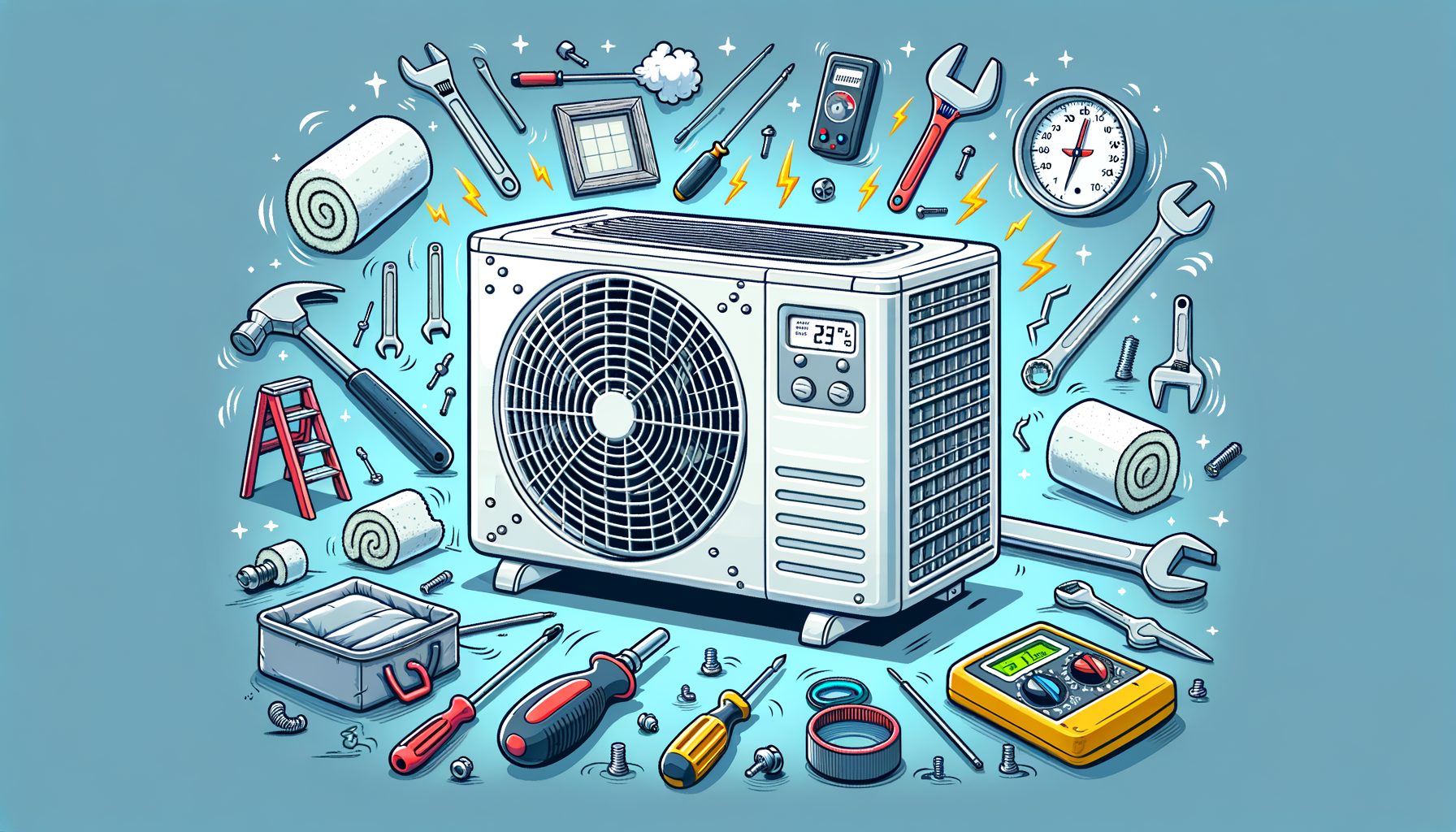
Wondering why your air conditioner is so loud? You’re not the only one. A noisy AC can keep you up at night, disrupt work calls, and spark worry that something’s about to fail. Good news is on your side: most sounds have specific causes—and fixes that aren’t complicated. Well, here it is: you’ll learn how to separate normal AC noise from red flags, pinpoint the most common reasons for loud operation, take practical steps today, and know when to call a pro. By the end, you’ll be ready to quiet your system, protect it from damage, and dodge surprise costs, whether you use a central system, a mini split, or a window unit.
Understanding Normal vs. Abnormal AC Noise (Decibels, Vibration, and Location)
Start by defining what “loud” means. Many modern indoor air handlers run around 40–55 dB (think quiet library to normal conversation), window units often hover near 50–60+ dB, and outdoor condensers typically measure 60–70 dB a few feet away. Keep this in mind: a 10 dB jump can feel roughly twice as loud to your ears. If your system suddenly gets much louder or introduces new sounds—rattling, banging, squealing, grinding, or persistent whistling—take that as a likely problem, not normal operation. A free smartphone decibel app can be used to grab a baseline before and after maintenance.
Location matters. Indoors, the blower (fan), return air grille, and ductwork are common noise sources. Outdoors, the fan, compressor, and cabinet usually take the blame. For window and portable units, everything lives inside one box, so vibration and panel rattle tend to stand out. At night, quieter background conditions can make your AC seem louder even when its output hasn’t changed.
Pattern matters too. A steady hum often points to electrical components or fan motors. Metallic rattles usually come from loose screws, panels, or debris contacting a fan blade. A high-pitched squeal can indicate a dry or failing blower motor bearing. A rhythmic thump or “washing machine” wobble suggests an imbalanced blower wheel or fan blade. Short, sharp clicks at startup and shutdown are normal relays; rapid, continuous clicking can indicate electrical arcing or a failing contactor that needs attention. If in doubt, compare your notes to the manufacturer’s noise specs in the product manual or support page—brands frequently publish typical decibel ratings. For general noise and hearing context, see the CDC’s guide to everyday decibel levels at cdc.gov.
Common Causes of Loud AC Units and How to Fix Them
Most loud AC issues trace to vibration, airflow restriction, worn moving parts, or refrigerant and electrical problems. Begin with safe, simple checks before spending money.
1) Loose panels and fasteners: Rattling or buzzing often means cabinet screws have backed out. Power should be turned off at the breaker. Then snug all panel screws and the outdoor unit’s top grille. Replace missing rubber grommets on fan guards and panels. Adding thin weatherstrip where metal meets metal can dramatically reduce vibration.
2) Dirty blower wheel or fan blades: Dust buildup throws fans off balance, creating a roaring or wobbling sound. Turn off power, remove the access panel, and gently brush or vacuum the blower wheel. For outdoor fans, remove debris and wipe blades with a damp cloth. Rebalancing often happens naturally with even cleaning; avoid bending blades.
3) Clogged air filter or blocked return: Whistling or a harsh whoosh usually means the system is starved for air. Replace the filter (check monthly; change at least every 1–3 months). Make sure return grilles aren’t hidden behind furniture. Using a filter with an overly high MERV rating can increase noise and strain; consult the EPA’s guidance at epa.gov.
4) Debris in the outdoor unit: Leaves, twigs, or even zip ties may strike the fan blade, causing tapping or clacking. With power off, remove the top grille and clear debris. Keep 2–3 feet of clearance around the condenser for healthy airflow.
5) Failing bearings or motor: A persistent squeal, grind, or growl points to a blower or condenser fan motor wearing out. Some motors can be lubricated; many are sealed and must be replaced. If the noise changes with fan speed, that’s another clue the motor is the source.
6) Ductwork vibration or “oil canning”: Thin sheet metal can pop or buzz when static pressure runs high. Potential fixes include sealing duct leaks with mastic (not just tape), adding insulation, installing vibration isolators, or having a pro adjust blower speed and static pressure. ENERGY STAR’s guidance on duct sealing is a solid starting point: energystar.gov.
7) Refrigerant hiss or gurgle: Brief hissing at shutdown can be normal equalization. Continuous hissing, bubbling, or a sudden drop in cooling may indicate a leak or restriction. Do not open the refrigerant circuit yourself. In the U.S., Section 608 requires certified handling—see the EPA’s rules at epa.gov.
8) Compressor or contactor noise: Loud humming, chattering, or a harsh buzz during startup may signal a failing contactor or a compressor that’s struggling to start. A technician can test amperage draw and may recommend a hard-start kit or component replacement.
Well, here it is—a quick table to match sounds with likely causes and next steps.
| Noise Pattern | Likely Cause | DIY or Pro? | Quick First Step | Typical Pro Cost |
|---|---|---|---|---|
| Rattling/metal buzz | Loose panels, fan guard, or debris | DIY | Tighten screws, clear debris | $0–$150 (if parts needed) |
| Whistling/air whoosh | Clogged filter, blocked return, leaky ducts | DIY first | Replace filter, clear obstructions | $200–$800 (duct sealing) |
| Squeal/screech | Worn blower or fan motor bearings | Pro | Shut system, schedule service | $300–$800 (motor) |
| Grinding/growling | Failing motor or blower wheel | Pro | Turn off to prevent damage | $150–$400 (wheel) + labor |
| Banging/clunking | Loose or broken fan blade, object inside | DIY first | Inspect and remove object | $150–$350 (blade) |
| Continuous hiss/bubble | Refrigerant leak or restriction | Pro (certified) | Do not run; call technician | $200–$600+ (diagnosis) + refrigerant |
| Chatter/clicking | Failing contactor or relay | Pro | Turn off and schedule repair | $150–$350 |
| Low-frequency hum | Compressor mounts or vibration | DIY/Pro | Add pads, check leveling | $50–$150 (pads), $200–$500 (mounts) |
Looking for a deeper maintenance primer? The U.S. Department of Energy offers practical AC care tips at energy.gov. Those basics often trim noise and extend equipment life at the same time.
Preventive Maintenance Checklist to Keep Noise Low
Quiet systems are usually well-maintained systems. The most cost-effective way to reduce noise is prevention: cut vibration, keep airflow smooth, and catch wear early. Use the following checklist season by season.
Monthly (peak season):
- Inspect and replace the air filter. If it looks gray or you can’t see light through it, swap it. Choose a MERV that balances air quality with airflow (often MERV 8–11 for residential, per manufacturer guidance).
- Clear the return and supply vents. Keep furniture and curtains at least a few inches away.
- Look and listen. Note any new rattles, squeals, or whistling, and record approximate decibels with a phone app so trends can be spotted.
Quarterly:
- Vacuum dust from the indoor blower cabinet area (power off). Wipe accessible blower blades gently.
- Rinse the outdoor condenser coil from the inside out with a garden hose (power off). Avoid high pressure that can fold fins.
- Trim vegetation to maintain at least 2–3 feet of clearance around the condenser.
- Verify that the outdoor unit is level. If needed, shim the pad or add vibration isolation pads to reduce low-frequency hum.
Twice a year (spring/fall):
- Inspect ductwork for loose connections, gaps, or kinks. Seal small leaks with mastic and mesh tape; avoid standard cloth duct tape, which dries out. Proper sealing lowers static pressure, airflow noise, and energy bills.
- Tighten cabinet screws, fan guards, and access panels. Replace missing rubber grommets or add thin foam tape where metal touches metal.
- Clean or replace return grilles if they’re whistling. If whistling persists with a clean filter, consider a larger return or a lower-resistance grille.
Annually (pro tune-up):
- Schedule professional service to test motor amperage, refrigerant charge, contactor condition, and static pressure. Early signs of bearing wear or electrical chatter can be caught before they become noisy breakdowns.
- Ask about blower balancing and speed adjustments if ducts are noisy. Small tweaks can significantly reduce airflow roar.
Optional upgrades that quiet systems: anti-vibration pads under the condenser, flexible duct connectors near the air handler, acoustic liner on supply plenums, and a sound blanket designed for your specific compressor model. For new systems, variable-speed blowers and inverter-driven compressors are typically much quieter than single-speed units—often the difference between “background” and “noticeable” during long cycles.
When to Call a Professional and What It Might Cost
DIY works well for filters, debris removal, tightening screws, and clearing airflow. Certain noises and symptoms, though, signal risk to your equipment, safety, or warranty—time to bring in a licensed HVAC technician.
Call a pro if you notice:
- Grinding, screeching, or strong electrical smells (possible motor failure).
- Rapid clicking or chattering at the outdoor unit (contactor arcing or low voltage).
- Continuous hissing/bubbling, frost on lines, or warm air with high noise (refrigerant issue).
- Banging from the indoor or outdoor fan that doesn’t stop after clearing debris (bent blade or loose wheel).
- Frequent breaker trips or dimming lights at startup (compressor hard starting).
Typical cost ranges (vary by region and brand):
- Service call/diagnostic: $75–$150.
- Blower or condenser fan motor: $300–$800 installed.
- Blower wheel replacement and cleaning: $150–$400.
- Contactor or relay: $150–$350.
- Duct sealing or repair: $200–$1,000 depending on scope.
- Refrigerant leak check and repair: $200–$600+ for diagnostics; refrigerant pricing varies by type and amount.
- Compressor replacement: $1,200–$3,000+ (consider system age before investing).
Pro tip: If your system is older than 10–12 years and a quote exceeds roughly one-third the cost of a new, higher-efficiency unit, ask for a repair-vs-replace comparison that includes noise levels (dB ratings) and projected energy savings. What’s interesting too: local utility rebates may exist for high-efficiency, low-noise equipment. For general HVAC contractor standards, the Air Conditioning Contractors of America (ACCA) offers consumer resources at acca.org.
FAQs: Quick Answers to Common Noise Questions
Q: Is it safe to keep running a loud air conditioner? A: If the noise is new, sharp, or worsening—especially grinding, squealing, or banging—turn it off. Check basics (filter, debris). If the sound continues, call a pro to avoid costly damage.
Q: Can a dirty filter really make an AC loud? A: Absolutely. A clogged filter increases static pressure, which causes whistling, airflow roar, and extra strain on the blower. Swapping a $10–$20 filter can instantly reduce noise and extend motor life.
Q: How many decibels should an AC be? A: Indoors, 40–55 dB is common; outdoors, 60–70 dB near the unit. Window units can hit 50–60+ dB. Compare your readings with the manual and verify with a phone dB app.
Q: Do compressor sound blankets work? A: Quality, model-specific blankets can trim low-frequency hum by a few decibels without hurting performance, but only use products approved by your unit’s manufacturer and keep airflow unobstructed.
Q: Why does my AC seem louder at night? A: Lower ambient noise makes the AC stand out more, and cooled metal can “ping” as it contracts. New rattles or squeals at night should be investigated just like daytime noises.
Conclusion: Quiet Your AC, Protect Your Comfort, and Save Money
Noise is your air conditioner talking. You now know how to separate normal hum from problem sounds, the common reasons an AC gets loud, the practical fixes to try, and when to call a professional. Start with simple wins: replace the filter, clear debris, tighten panels, and level the condenser. Those basic actions often cut noise immediately and reduce wear on motors and compressors. If squeals, grinding, continuous hissing, or electrical chatter persist, schedule service—fast action can prevent bigger bills and mid-heatwave breakdowns.
Ready to act today? Take five minutes: check the filter, listen at the return grille, confirm outdoor clearance, and record a quick dB reading. Then set a reminder for a seasonal tune-up and consider small upgrades like vibration pads or duct sealing. If your system is aging and consistently loud, ask an HVAC pro to quote a variable-speed or inverter-based replacement with published noise ratings—you may be surprised how quiet modern systems can be.
Your comfort should sound like calm, not chaos. Take these steps now to enjoy cooler air, lower stress, and often lower energy bills. If this guide helped, share it with a friend who’s been asking why their air conditioner is so loud, and bookmark it for your next maintenance day. Want the quietest home on the block? Start with a clean filter, a clear condenser, and a quick inspection—then build from there. What’s the very first noise-reduction step you’re going to try today?
Sources and further reading:
- U.S. Department of Energy – Air Conditioning: https://www.energy.gov/energysaver/air-conditioning
- U.S. EPA – Section 608 Refrigerant Management: https://www.epa.gov/section608
- CDC – What Noises Cause Hearing Loss: https://www.cdc.gov/nceh/hearing_loss/what_noise_levels_hearing_loss.html
- ENERGY STAR – Duct Sealing: https://www.energystar.gov/saveathome/seal-insulate-home/duct-sealing
- U.S. EPA – What Is MERV Rating?: https://www.epa.gov/indoor-air-quality-iaq/what-merv-rating
- Air Conditioning Contractors of America (ACCA): https://www.acca.org/home